the truth about cosmetics

K-Beauty: When Global Success Hides the Reality of Cosmetic Ingredients

South Korea has established itself as an undisputed global leader in the cosmetics industry. Behind the now-ubiquitous term K-Beauty lies a model that fascinates as much as it raises questions. Popularized by social media, influencers, and the Korean cultural wave, Korean cosmetics promise flawless, radiant, and healthy skin. But beyond the hype, what do cosmetic ingredients, formulas, and product transparency really reveal?

A Highly Desirable… and Heavily Marketed Beauty Routine

Innovative, affordable, playful, colorful, and youthful, K-Beauty has built an extremely attractive image. The Korean skincare routine is presented as a true philosophy of skin care, based on gentleness, prevention, and effectiveness. It relies on a holistic approach aimed at preserving the skin barrier and preventing premature aging.

This routine is characterized by multiple steps, adaptable to individual skin needs, far from the rigid myth of the mandatory 10-step routine. Yet, this number has become a powerful marketing tool—sometimes intimidating, but above all highly effective.

K-Beauty Label Decoding
What’s Really Inside K-Beauty?
K-Beauty Ingredients

Innovation and Star Ingredients: The Core of K-Beauty Messaging

The strength of Korean cosmetics lies largely in constant innovation. Brands invest heavily in research and development, creating so-called advanced formulations often highlighted for their effectiveness and skin tolerance.

Among the emblematic ingredients are:

  • ginseng, known for toning and anti-aging properties
  • green tea, antioxidant and soothing
  • rice water, soothing and balancing
  • honey, known for repairing properties
  • centella asiatica (Cica), soothing and regenerating

Another strong signature is fermentation, inspired by Korean food traditions. Galactomyces and saccharomyces are used to improve hydration, radiance, and skin tolerance. These are combined with well-known cosmetic ingredients such as hyaluronic acid, peptides, niacinamide, retinol, and fruit acids.

However, these widely promoted actives require careful formula decoding to understand their actual role within compositions.

Routine Breakdown: Between Effectiveness and Overconsumption

Korean routines rely on key steps often presented as essential:

  • double cleansing
  • gentle exfoliation
  • layered hydration
  • targeted serums
  • moisturizers
  • sheet masks

This accumulation of products enhances the desirability of the model but also raises the issue of cosmetic overconsumption, a topic rarely addressed in marketing narratives.

The 10-Step Myth and the Reality of Formulas

Contrary to popular belief, the Korean routine does not necessarily require 10 steps. It is designed to be flexible and adaptable. However, K-Beauty marketing deliberately maintains confusion by linking performance to product multiplication.

The exotic appeal of ingredients—snail mucin, bee venom, various ferments—is widely exploited and often presented as miraculous, without always being supported by clear ingredients analysis accessible to consumers.

Regulation: Transparency with Limits

A critical point often absent from promotional discourse is regulatory differences. Some Korean products contain substances that are banned in Europe but allowed or regulated in South Korea.

These include:

  • certain parabens banned in the European Union
  • hydroquinone, banned in Europe since 2022, still used in some Korean brightening products

This makes rigorous label decoding essential for European consumers.

K-Beauty: Ingredients Exposed

Natural Claims and Greenwashing: A Blurred Line

K-Beauty strongly emphasizes the natural aspect of its formulations. However, this communication often borders on greenwashing. While naturally derived ingredients are present, their proportion in formulas is rarely dominant.

Moreover, these ingredients—ginseng, green tea, centella asiatica, bakuchiol, rice water—are already well known in natural and organic cosmetics, despite marketing narratives suggesting otherwise.

A Massive Market That Calls for Vigilance

With over $10 billion in export revenue and projections reaching $16 billion by 2029, K-Beauty is flooding the global market. France is currently the leading European consumer of Korean cosmetics.

In the face of this surge, one thing is clear: analyzing ingredients, decoding formulas, and demanding true product transparency is essential.

Beyond Marketing: Time for Ingredient Decoding

Behind promises of innovation and effectiveness, K-Beauty requires a critical perspective. Examining INCI lists, understanding the reality of highlighted ingredients, and questioning regulatory differences are essential steps to regain control over cosmetic choices.

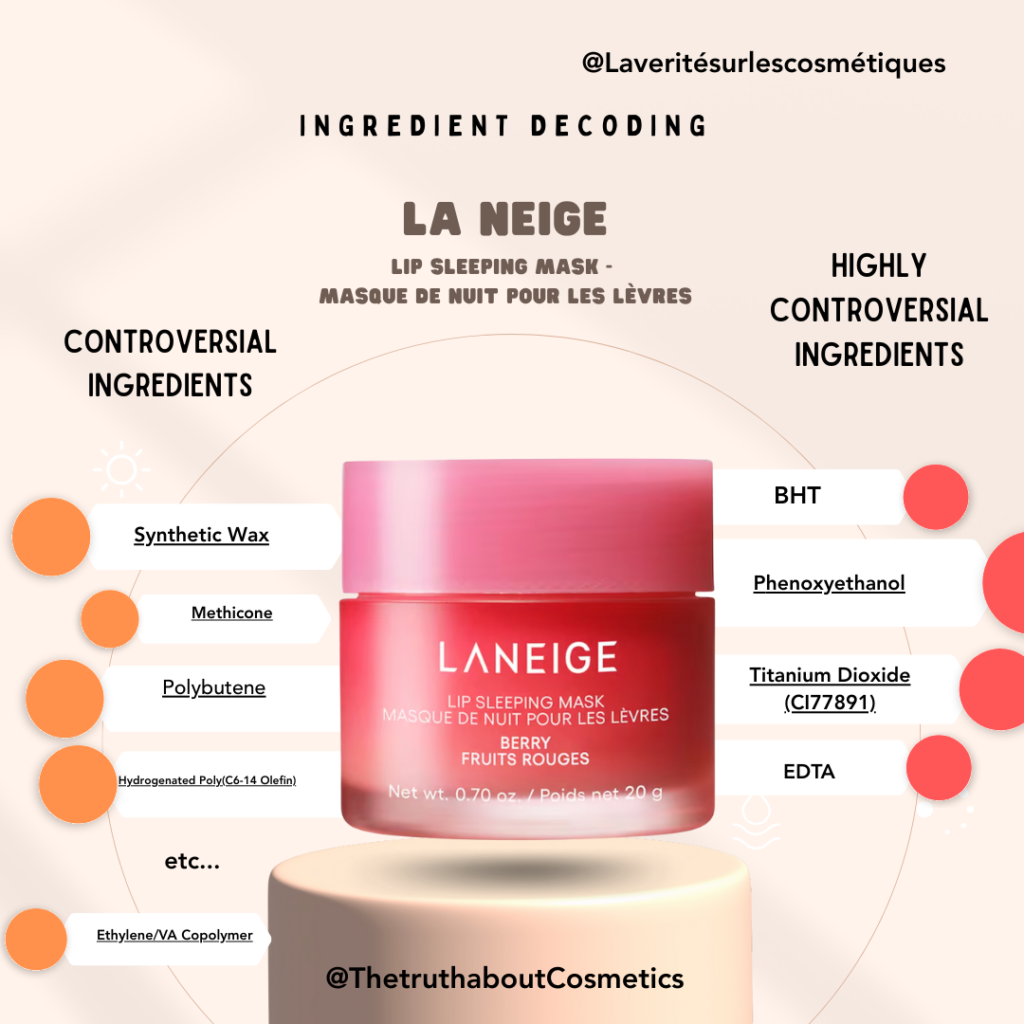
LA NEIGE Lip Sleeping Mask- 

This product has in its formula a couple of highly controversial, potentially toxic (including endocrine disruptors) and also polluting ingredients, like :

  • BHT
  • PHENOXYETHANOL
  • DIOXYDE DE TITANE (inadapté dans un produit pour les lèvres, car partiellement ingéré)
  • SYNTHETIX WAX
  • POLYBUTENE
  • EDTA
    etc
LA NEIGE : Lip Maks : ingredients decoded
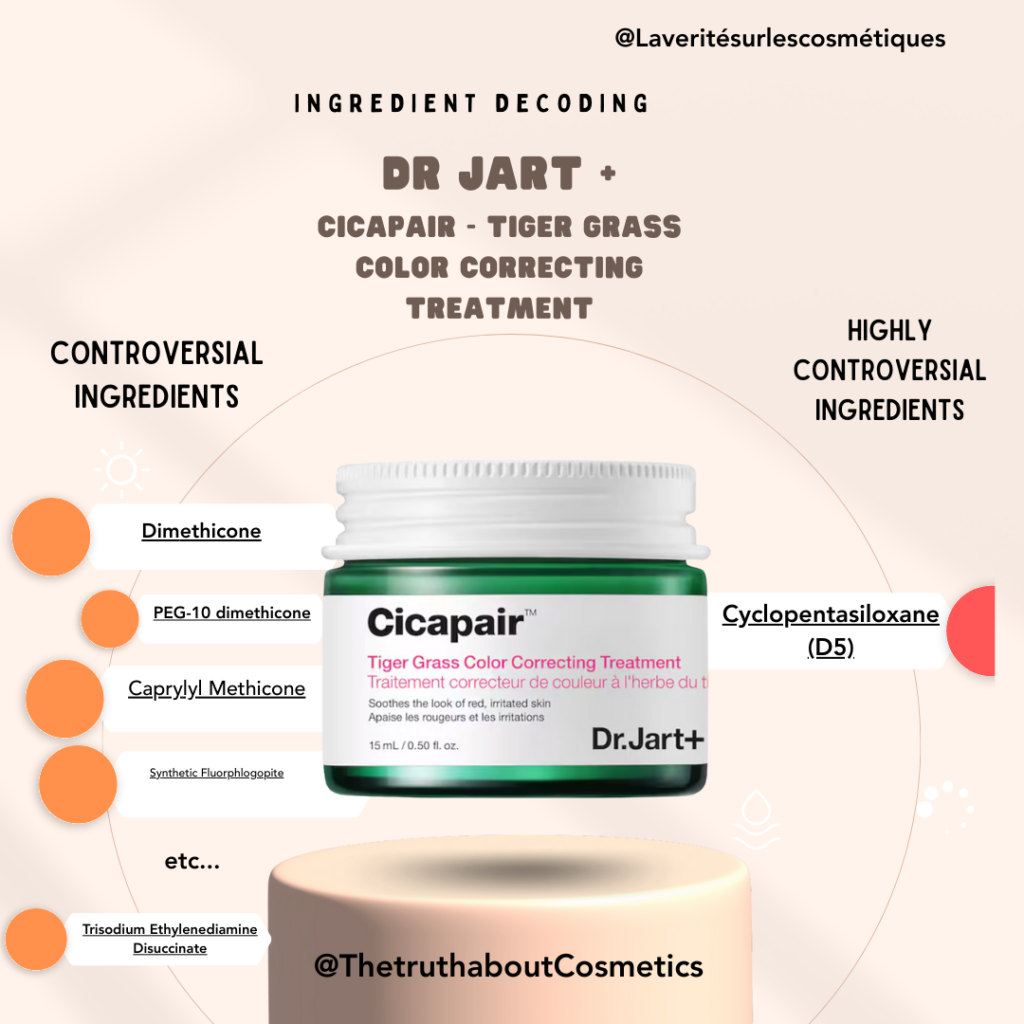
DR JART Cicapair Color-Correcting : formulation ?

DR JART + Cicapair – Tiger Grass Color Correcting Treatment

Same here : this product has in its formula a couple of highly controversial, potentially toxic and also polluting ingredients, like :

  • CYCLOPENTASILOXANE (D5)
  • DIMETHICONE
  • PHENYL TRIMETHICONE
  • LAURYL PEG-8 DIMETHICONE
  • DIMETHICONE/VINYL DIMETHICONE CROSSPOLYMER,
  • PEG-10 DIMETHICONE,
  • TRISODIUM ETHYLENEDIAMINE DISUCCINATE,

etc

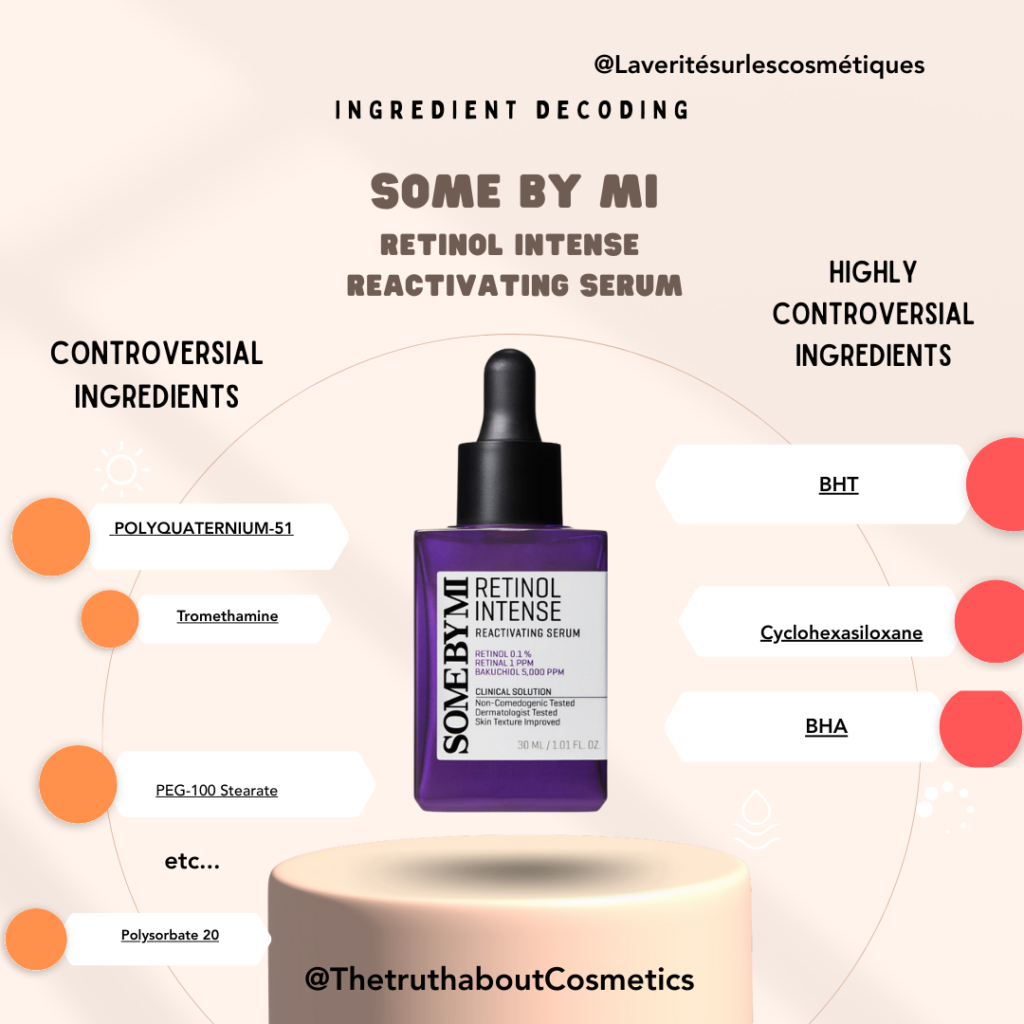
Some By Mi Retinol Intense Reactivating Serum

Again, same story here : this product has in its formula a couple of highly controversial, potentially toxic and also polluting ingredients, like :

  • BHT
  • BHA
  • CYCLOHEXASILOXANE
  • POLYQUATERNIUM-51,
  • TROMETHAMINE
  • PEG-100 STEARATE
  • POLYSORBATE 20
  • GLYCERYL POLYMETHACRYLATE
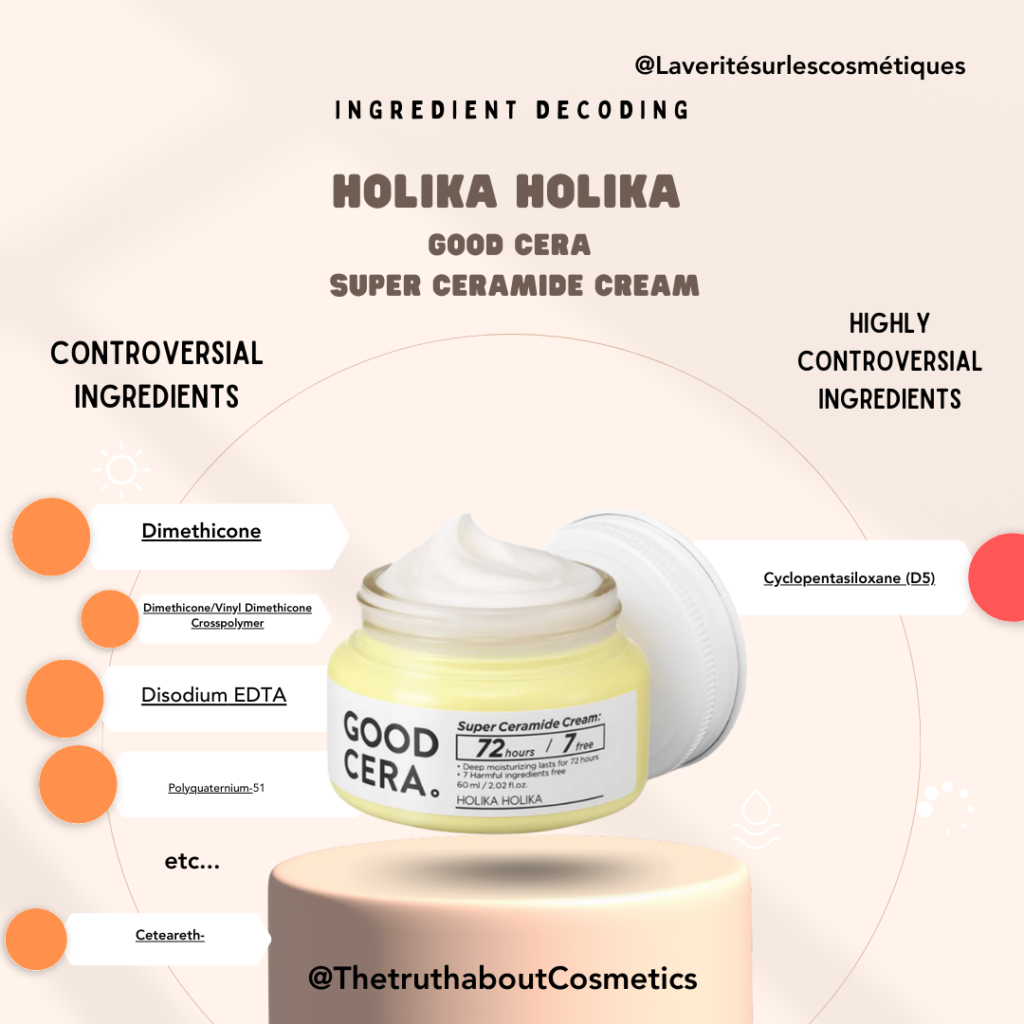
Holika Holika Good Cera Ceramide Cream ; controversial ingredients

HOLIKA HOLIKA Good Cera Super Ceramide Cream

Another exemple ; this cream contains a couple of highly controversial, potentially toxic and also polluting ingredients, like :

  • CYCLOHEXASILOXANE 
  • DIMETHICONE
  • Dimethicone/Vinyl Dimethicone Crosspolymer,
  • EDTA
  • Polyquaternium-51

What about the alternatives, then?

Luckily there are also nowadays K- beauty products with very clean formulas, without any of the highly controversial ingredients listed in the products above.

Let’s dive into a selection of K-Beauty product’s that highlight interesting classical and innovative  botanical  ingredients.

K-Beauty Product Transparency

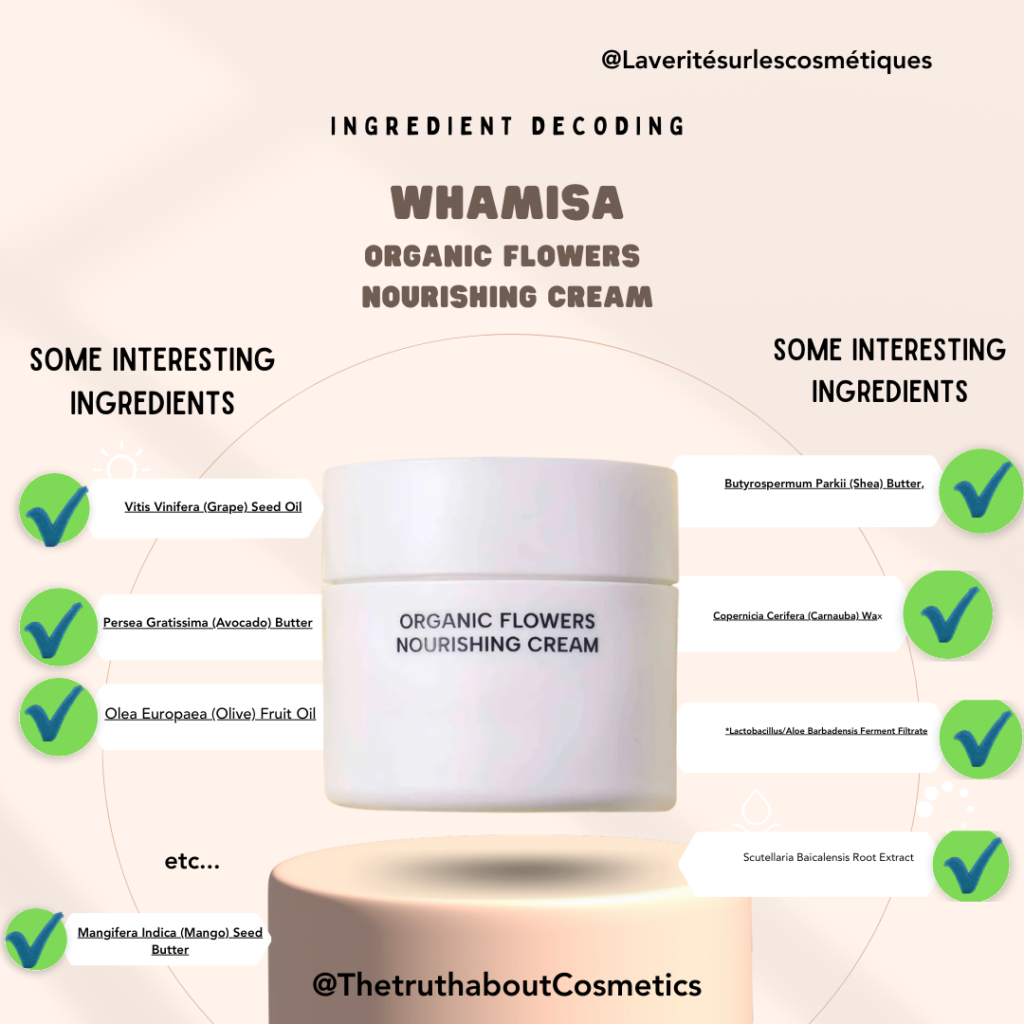
WHAMISA Organic Flowers Nourishing Cream

This natural & organic certified moisturizer doesn’t contain any controversial, potentially toxic or polluting ingredient.

The formula is based on carefully selected botanical, mainly organic ingredients and provides best quality skincare pour dry, mature and « normal » skin types.

  • Aloe barbadensis leaf extract*
  • Theobroma Cacao (Cocoa) Seed Butter
  • Persea Gratissima (Avocado) Butter,
  • Vitis Vinifera (Grape) Seed Oil,
  • Lactobacillus/Aloe Barbadensis Ferment Filtrate,
  • Euphorbia Cerifera (Candelilla) Wax,
  • Scutellaria Baicalensis Root Extract
WHAMISA Organic-Flowers Nourishing Cream
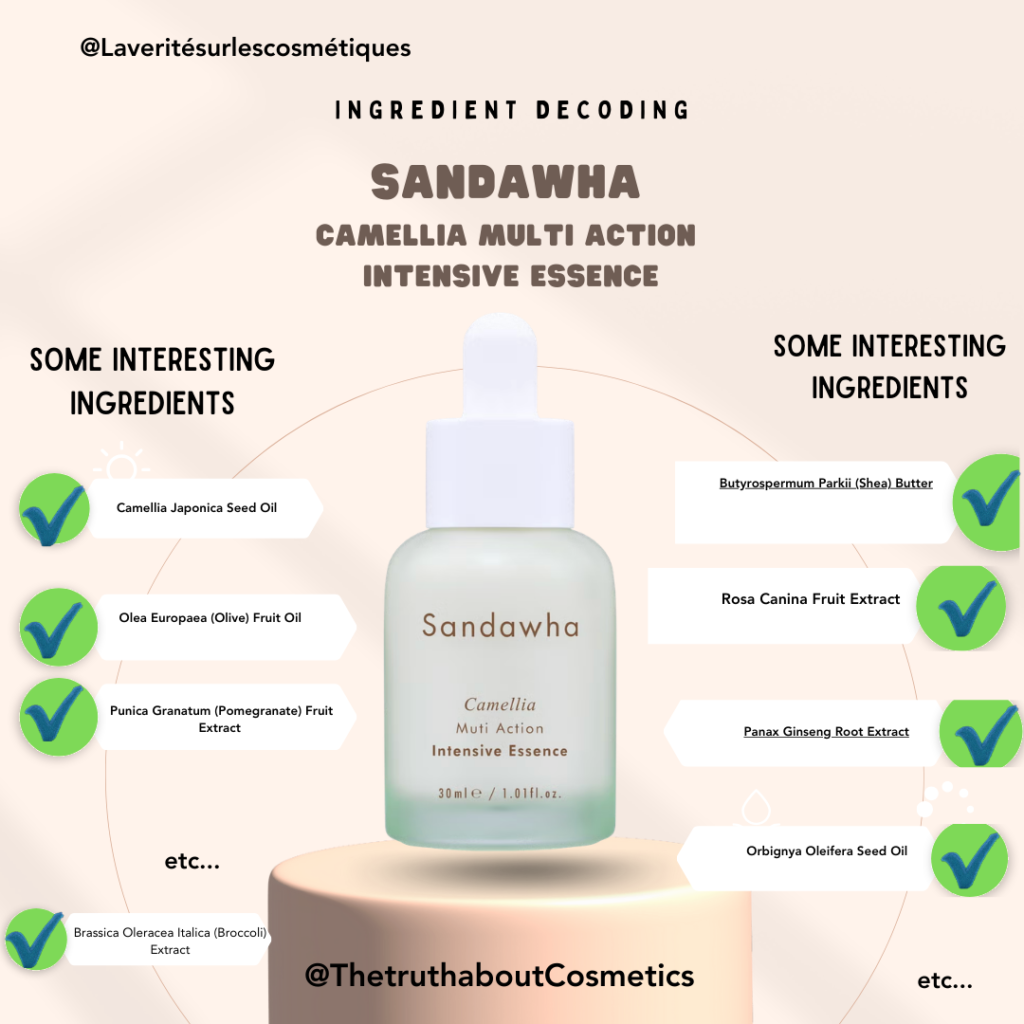
SanDaWha Camellia Intensive Essence: formulation

SANDAWHA Camellia Multi Action Intensive Essence

This natural & organic certified Serum doesn’t contain any controversial, potentially toxic or polluting ingredient.

The formula is based on carefully selected botanical, mainly organic ingredients and provides best quality skincare for mature skintypes, including, for example :

  • Centella Asiatica Extract
  • Camellia Japonica Flower Extract,
  • Camellia Japonica Seed Oil,
  • Magnolia Kobus Bark Extract,
  • Butyrospermum Parkii (Shea) Butter,
  • Rosa Canina Fruit Extract,
  • Panax Ginseng Root Extract,
  • Punica Granatum (Pomegranate) Fruit Extract,
  • Hizikia Fusiforme Extract

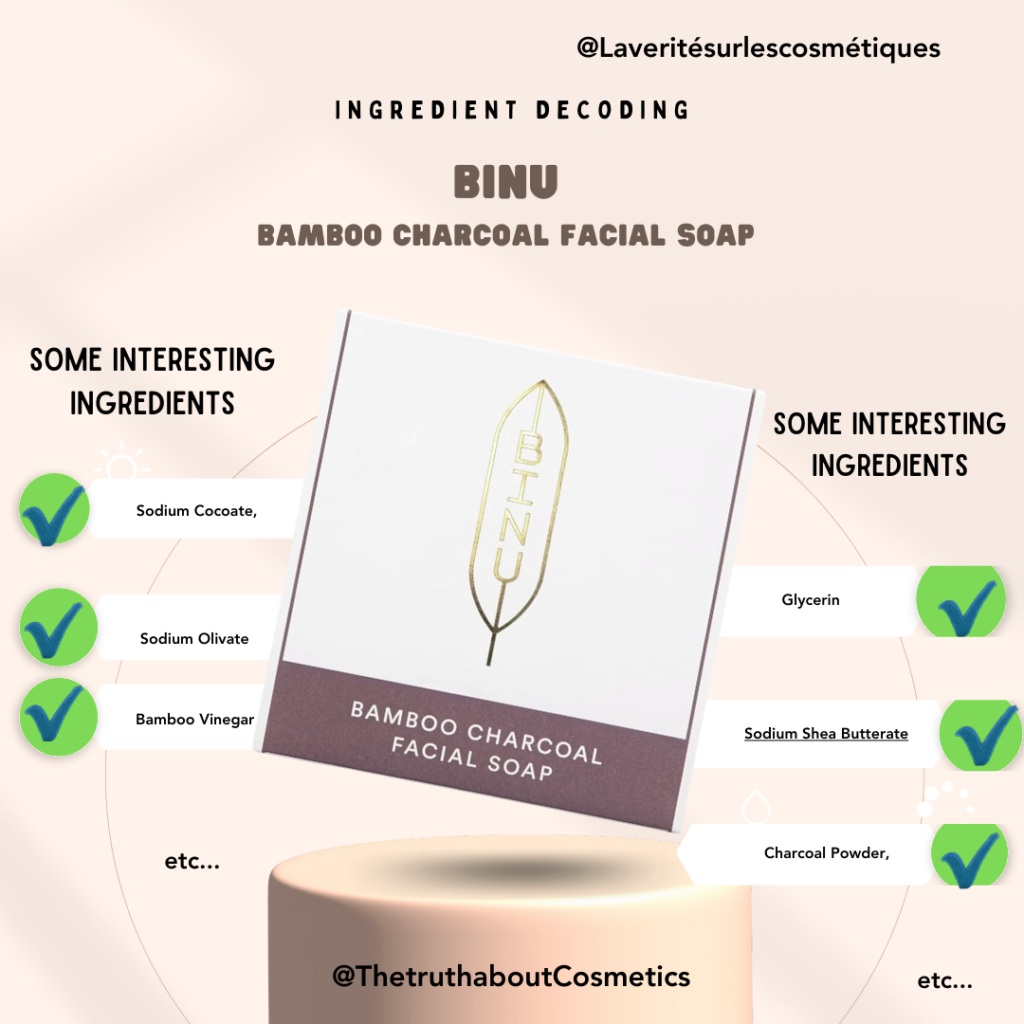
BINU Bamboo Charcoal facial soap 


This natural & organic certified Facial Soap doesn’t contain any controversial, potentially toxic or polluting ingredient.

The formula is based on carefully selected botanical, mainly organic ingredients and provides best quality skincare for mixtes skintypes, prone to imperfections – including, for example ingredients like :

  • Aloe barbadensis leaf extract*
  • Acacia decurrens flower wax
  • Acmella oleracea extract
  • Secale cereale (Rye) seed extract*
  • Boerhavia diffusa root extract
  • Algae extract
  • Leontopodium alpinium extract*
BINU Bamboo Charcoal Facial Soap : ingredients

FAQ – K-Beauty Cosmetic Ingredients

What are the main ingredients used in K-Beauty products?

K-Beauty highlights ingredients such as centella asiatica, ginseng, green tea, rice water, and ferments, alongside commonly used cosmetic ingredients like humectants and stabilizers.

Why is it important to analyze K-Beauty ingredients?

Analyzing ingredients helps verify whether marketing claims reflect the actual composition and understand the role of each component in the formula.

Are K-Beauty products mostly natural?

Natural ingredients are often promoted, but they are not necessarily present in high concentrations within the formulas.

What is the 10-step Korean skincare routine?

It refers to a multi-step skincare approach, but it is not mandatory and can be adapted depending on individual needs.

Are cosmetic regulations the same in Korea and Europe?

No. Some ingredients allowed or regulated in South Korea are banned in the European Union, making label decoding essential.

The “Cosmeto Match” of Facial Sunscreens: SUPERGOOP vs MÁDARA

In the Cosmeto Match series, we regularly compare two similar products from two different brands—one from the conventional cosmetics sector, the other from certified natural and organic cosmetics.

Both products compete on the same field: ingredient comparison.
Throughout the match, the commentator guides you step by step, explains the rules when necessary, and decodes cosmetic formulations.
Let the match begin—may the best formula win.

Conventional vs Certified Organic Sunscreens: Different Formulation Approaches

Sunscreen manufacturers do not all work the same way. On one side, conventional cosmetics rely on a wide range of ingredients that are authorized under public health regulations and European cosmetic law. However, among these authorized substances, many remain highly controversial.

On the other side, certified natural and organic cosmetics operate with a much more restricted list of ingredients. Substances considered problematic, potentially toxic, polluting, or controversial are simply excluded by certification standards.

When it comes to sun protection, the main difference lies in UV filters:

  • Conventional sunscreens often use chemical UV filters, or a mix of chemical and mineral filters.
  • Certified organic sunscreens primarily rely on mineral filters (titanium dioxide* and zinc oxide), while offering the same standardized SPF protection levels.

The Shared Goal: Effective Sun Protection

In both cases, the objective is the same: effective protection against UVA and UVB rays.
Sun protection should never be taken lightly—especially for children and babies. Protecting the skin against melanoma risk and premature skin aging is essential.

However, sunscreen alone only provides partial protection. Factors such as skin phototype, location, exposure time, medical history, and the quantity of sunscreen applied are often overlooked. Many consumers—and even professionals—are unclear about what SPF numbers actually mean, beyond recommending higher SPF or more expensive products.

Product Comparison: Two Very Different Approaches

In both products, UV protection is the goal. Yet one relies mainly on synthetic ingredients and controversial substances, while the other opts for natural ingredients approved in certified organic cosmetics.

Team 1: SUPERGOOP

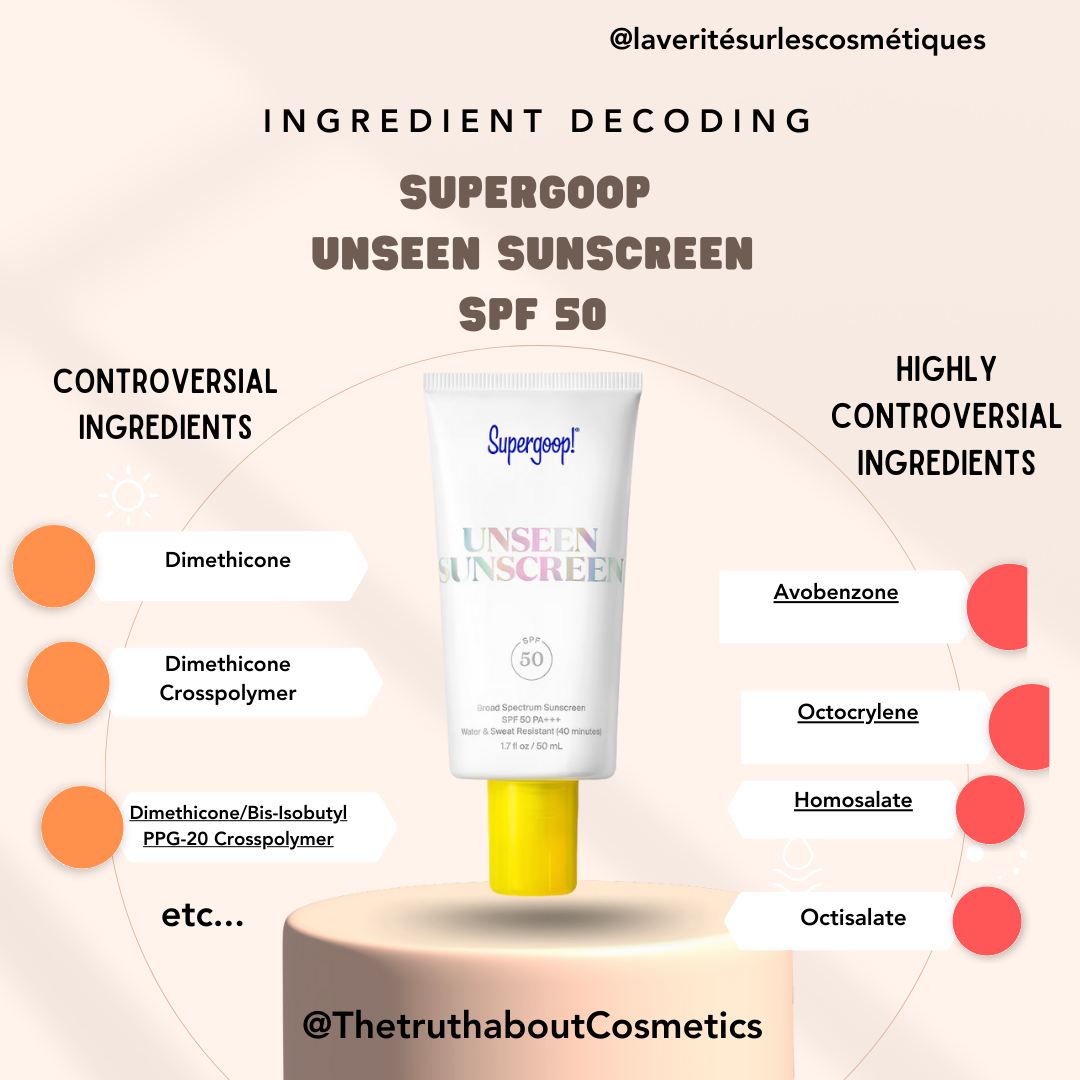
SUPERGOOP Unseen Sunscreen SPF 50 PA++

50 ml – $38

According to the brand:

« A weightless gel that feels comfortable and breathable on skin with a natural finish. Recommended for normal, combination, dry, oily, sensitive or acne-prone skin. »

Key Claims

  • Non-greasy & non-irritating formula
  • Makeup primer
  • Dermatologically tested
  • Vegan & cruelty-free
  • Suitable for all skin types

Marketed as a “revolutionary” sunscreen, the question remains: what is truly innovative here?

SUPERGOOP Sunscreen – INCI List

Ingredients (INCI):  Active ingredients : Avobenzone 3%, Homosalate 7%, Octisalate 5%, Octocrylene 9%

Other ingredients : Isododecane, Dimethicone/Bis-Isobutyl PPG-20 Crosspolymer, Dimethicone/Vinyl Dimethicone Crosspolymer, Dimethicone, Dimethicone Crosspolymer, Caprylic/Capric Triglyceride, Butyrospermum Parkii (Shea) Butter, Physalis Angulata Extract, Himanthalia Elongata Extract, Meadowfoam Estolide, Tocopherol, Jojoba Esters, Polymethylsilsesquioxane, Caprylyl Glycol, Diethylhexyl Syringylidenemalonate, Silica, Bisabolol, Dipotassium Glycyrrhizate.

Ingredient Analysis – SUPERGOOP

The first 5–8 ingredients define the product’s profile. Here, we immediately find multiple controversial chemical UV filters, silicones, and petrochemical-derived ingredients.

Controversial ingredients include:

  • Ethylhexyl Salicylate (Octisalate) – suspected endocrine disruptor
  • Avobenzone – suspected endocrine disruptor
  • Octocrylene – suspected endocrine disruptor
  • Homosalate – suspected endocrine disruptor
  • Multiple silicones – polluting, poorly biodegradable
  • Isododecane – mineral oil derivative

Verdict – SUPERGOOP

While this formula does provide UV protection, it relies heavily on controversial chemical filters, polluting silicones, and mineral oil derivatives.
Far from revolutionary, it represents one of the most problematic sunscreen formulations currently on the market.

Supergood : ingredient decoding

Team 2: MÁDARA

MÁDARA Anti-Age Mineral Facial Sunscreen SPF 30

40 ml – €32,95

This natural mineral sunscreen provides broad-spectrum UVA/UVB protection with an invisible finish.

MÁDARA Sunscreen – INCI List

Aloe Barbadensis (Aloe) Leaf Juice*, Zinc Oxide, Isoamyl Laurate, Dicaprylyl Carbonate, Glycerin**, Sorbitan Olivate, Cera Alba (Bees Wax)*, Lecithin, Polyglyceryl-2 Dipolyhydroxystearate, Silica, Cellulose, Dracocephalum Ruyschiana (Dragonhead) Cell Culture Extract, Camellia Sinensis Leaf Extract, Quercus Robur (Oak) Bark Extract, Vitis Vinifera (Grape) Seed Extract, Hydrolyzed Hyaluronic Acid, Sodium Hyaluronate, Sodium Chloride, Aroma/Fragrance, Rubus Idaeus (Raspberry) Seed Oil*, Sorbitan Caprylate, CI 77492 (Iron oxide)****, Palmitic Acid, Stearic Acid, Propanediol, Benzoic Acid, CI 77499, CI 77491 (Iron oxides)****, Aqua/Water, Ascorbyl Palmitate (Vitamin C), Sodium Phytate, Tocopherol (Vitamin E), Potassium Hydroxide, Benzyl Salicylate***, Limonene***, Citral***, Linalool***, Eugenol***

Ingredient Analysis – MÁDARA

The formula is built on hydrating and lipid-replenishing ingredients, including aloe vera, glycerin, beeswax, and plant-derived oils.
Zinc oxide (non-nano) ensures mineral UV protection, fully compliant with organic certification standards.

Verdict – MÁDARA

A balanced formulation using mineral UV filters, free from controversial ingredients, and respectful of both skin and environment.

Madara : beauty label decoder

FAQ – Facial Sunscreen Ingredients

What is the difference between chemical and mineral sunscreens?

Chemical sunscreens absorb UV rays, while mineral sunscreens reflect them using zinc oxide or titanium dioxide.

Are mineral sunscreens less effective?

No. Certified mineral sunscreens offer standardized, reliable UVA/UVB protection.

Why decode sunscreen ingredient lists?

Ingredient decoding helps identify controversial substances and understand environmental and health impacts.

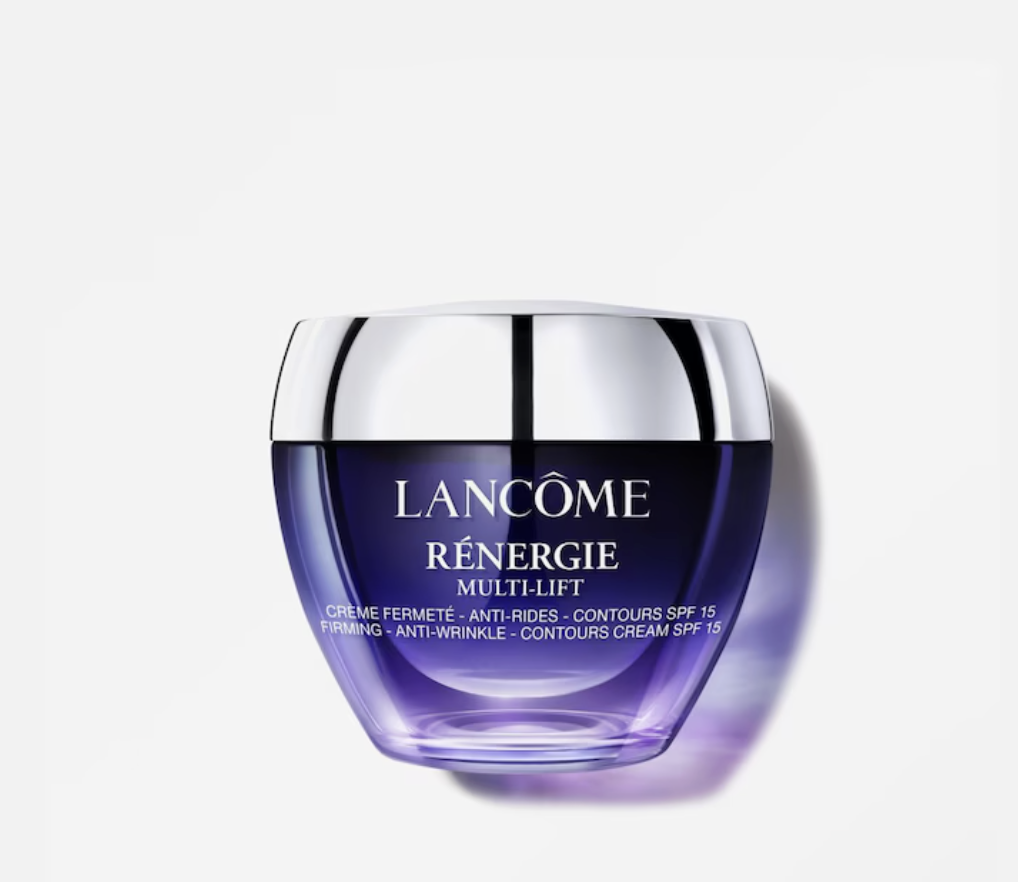
LANCÔME
Rénergie
Multi-Lift Cream
50 ml – €120

Lancôme Rénergie Multi-Lift Cream review

Products in the “luxury cosmetics” category, with prices significantly higher than those of other brands, are supposed to offer real “added value”: more sophisticated formulas and more visible results.

The question of a cosmetic product’s “effectiveness” is, however, debatable.

What exactly are we talking about? Better hydration of the upper layers of the epidermis? A visibly smoother face over time? For which skin type ?

And this discussion makes little sense if we do not also take into account the person’s overall lifestyle (sleep, diet, stress management, UV exposure, smoking or not, etc.).

If a “miracle cream” really existed, we would know it by now. The wealthiest people in the world would have already emptied the shelves of this fountain-of-youth product, regardless of price. As Rita Stiens wrote in her book The Truth About Cosmetics (“La Vérité Sur Les Cosmétiques “still available in bookstores):

“A healthy lifestyle cannot really be bought in a tube.”

That said, cosmetics undeniably play an important role in our daily lives. They contribute to basic hygiene, well-being, and to the positive relationship we can have with ourselves.

But what can a cream that costs up to twelve times more than another anti-aging moisturizer really contain?
Let’s take out our magnifying glass once again and take a closer look at both the product presentation and its formulation.

Lancôme’s Presentation of Rénergie Multi-Lift Cream*

Rénergie Multi-Lift Cream
Anti-wrinkle & firming cream SPF 15

What makes this product unique?

With Rénergie Multi-Lift, Lancôme laboratories developed a lifting and redefining skincare range with visible, clinically proven results:

  • After 4 hours: firmness restored
  • After 1 week: skin appears firmer and denser
  • After 4 weeks: facial contours appear lifted, wrinkles reduced, skin firmer
    *Clinical scores and self-assessment, 52 women

What does clinically proven results mean, again ?

  • Unlike pharmaceuticals, cosmetics are not subject to the same strict regulatory approval process. There is no universal, legally defined standard for “clinically proven” in cosmetics.
  • Large-scale or independent trials: The clinical studies might be small, short-term, or conducted by the company itself, which can introduce bias.
  • Guaranteed effectiveness: Results may vary widely between individuals, and the product might only show modest or statistically significant improvements that aren’t dramatic in real life.

Ingredients highlighted by the brand

  • Gluco-peptides, a powerful ingredient of natural origin derived from flax seed extract, grown in France and extracted using a biotechnological process.
  • Up Cohesion Complex to improve firmness and redefine facial contours.

In simplified marketing terms, this suggests that Lancôme holds exclusive formulation “secrets” and know-how—supposedly inspired by space biology and accelerated aging models—that other brands do not possess, making their products supposedly more “effective.”

But what happens behind the scenes?

Let’s take a closer look at the actual ingredients used.

INCI List – Lancôme Rénergie Multi-Lift Cream

AQUA / WATER / EAU, GLYCERIN, OCTOCRYLENE, ETHYLHEXYL SALICYLATE, BUTYLENE GLYCOL, DIMETHICONE, BUTYL METHOXYDIBENZOYLMETHANE, ALCOHOL DENAT., CYCLOHEXASILOXANE, HYDROGENATED JOJOBA OIL, PENTAERYTHRITYL TETRAETHYLHEXANOATE, CETYL ALCOHOL, PARAFFIN, GLYCERYL STEARATE, GLYCERYL DIBEHENATE, OCTYLDODECANOL, BEHENYL ALCOHOL, CI 14700 / RED 4, CI 19140 / YELLOW 5, C13-14 ISOPARAFFIN, GUANOSINE, SECALE CEREALE SEED EXTRACT, SODIUM HYDROXIDE, PHENOXYETHANOL, YEAST EXTRACT, ADENOSINE, PEG-100 STEARATE, ETHYLHEXYLGLYCERIN, TRIBEHENIN, POLYACRYLAMIDE, POLYSILICONE-11, LIMONENE, PENTYLENE GLYCOL, XANTHAN GUM, BENZYL ALCOHOL, LINALOOL, CAPRYLOYL SALICYLIC ACID, CAPRYLYL GLYCOL, ACRYLATES/C10-30 ALKYL ACRYLATE CROSSPOLYMER, DISODIUM ETHYLENE DICOCAMIDE PEG-15 DISULFATE, DISODIUM EDTA, KIWI FRUIT WATER, CITRONELLOL, BHT, LAURETH-7, COUMARIN, GLYCERYL BEHENATE, GLYCERYL STEARATE CITRATE, PARFUM / FRAGRANCE

Ingredient Analysis – Lancôme Rénergie Multi-Lift Cream

As always, the first 8–10 ingredients largely determine the overall profile of a cosmetic product, as they are present in the highest concentrations.

The formula starts with a combination of synthetic UV filters and silicones, all of which are considered suspected endocrine disruptors and are subject to regulatory concentration limits: Avobenzone, Octisalate, Octocrylene.

The moisturizing base consists mainly of silicones, glycerin, jojoba oil, mineral oils, solvents, and waxes—a combination of limited interest from a formulation perspective.

Controversial Substances Identified :

  • Avobenzone (Butyl Methoxydibenzoylmethane) – synthetic UV filter, suspected endocrine disruptor
  • Octisalate – synthetic UV filter, suspected endocrine disruptor
  • Octocrylene – synthetic UV filter, suspected endocrine disruptor
  • Phenoxyethanol – controversial synthetic preservative (restricted to 1%)
  • Silicones (Dimethicone, Cyclohexasiloxane, Polysilicone-11) – non-biodegradable, environmentally problematic
  • Disodium EDTA – poorly biodegradable chelating agent
  • BHT – preservative, endocrine disruptor
  • Chlorphenesin – synthetic preservative, potentially allergenic
  • Azo dyes (CI 14700, CI 19140) – synthetic pigments, potential allergens
  • PEG-100 Stearate – ethoxylated compound, environmentally problematic
  • Fragrance – unclear origin, potentially containing controversial substances

Verdict – Lancôme Rénergie Multi-Lift Cream

The anti-aging effect appears to rely primarily on a controversial chemical UV filter shield, substances suspected of endocrine disruption. While UV protection can slow skin aging, alternative approaches exist, such as sun avoidance or physical protection (hats, shade) and mineral sunscreens.

The rest of the formulation confirms a heavy reliance on synthetic and controversial ingredients, with only minimal natural components dispersed throughout. This raises a clear question: does this formulation truly justify its price?

FAQ – Lancôme Rénergie Multi-Lift Cream

Is Lancôme Rénergie Multi-Lift Cream effective against wrinkles?

The claimed anti-wrinkle effect mainly relies on surface-level cosmetic effects, including problematic UV filters and film-forming agents that temporarily improve the appearance of the skin.

What are the main ingredients in Lancôme Rénergie Multi-Lift Cream?

The formula includes controversial synthetic UV filters, silicones, glycerin, mineral oils, and a small proportion of natural-origin ingredients.

Does Lancôme Rénergie Multi-Lift Cream contain controversial substances?

Yes, the INCI list highlights the presence of synthetic UV filters, non-biodegradable silicones, controversial preservatives, and synthetic additives. Some of these ingredients are classified as suspected endocrine disruptors.

Is Lancôme Rénergie Multi-Lift Cream suitable for sensitive skin?

The presence of fragrance, chemical UV filters, and certain preservatives may raise concerns for sensitive or reactive skin types.

Why is Lancôme Rénergie Multi-Lift Cream so expensive?

The high price reflects the brand’s luxury positioning, marketing investment, and claimed technologies rather than a predominantly natural formulation.

Does Lancôme Rénergie Multi-Lift Cream contain silicones?

Yes, several silicones are present, including dimethicone and cyclohexasiloxane, used mainly for an immediate smoothing effect.

Does Lancôme Rénergie Multi-Lift Cream provide sun protection?

The formula includes chemical UV filters with SPF 15, contributing to protection against photoaging. But the chosen sunscreens are highly problematic.

Super “anti-oxidant complex” and sustainable brand commitments —

Or Just More Marketing?

Estee Lauder is one of the world’s most powerful cosmetic groups, second only to L’Oréal. Like most multinational beauty companies, it proudly promotes its “Caring for the Environment » commitment with polished sustainability statements.

On their website, you can read

“Caring for the Environment

We’re committed to a more beautiful future. Our mission will always be to bring the best to everyone we touch and to help support the environment in which we live.Through innovation and responsible business practices that help address climate change, we’re working to create a more beautiful world for future generations. A Force for Nature What we’re doing today and tomorrow for a more beautiful future. “


Let’s have ac closer look at the product, then…

But what happens when we look past the promises and focus on a single product — not through marketing claims, but through its actual ingredients?

This month’s Cosmetic Truth Analysis spotlights:

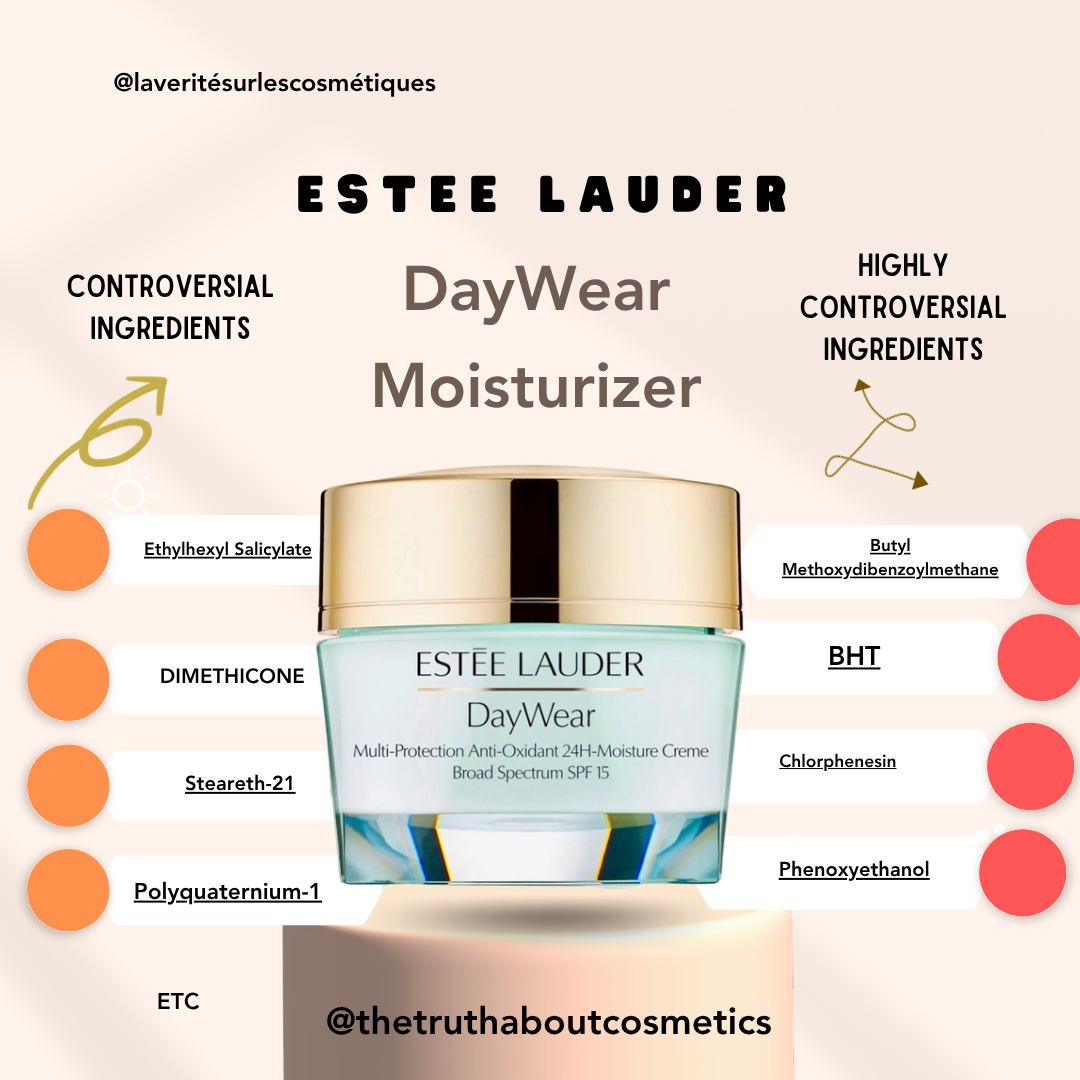
Estee Lauder DayWear Moisturizer Multi-Protection Anti-Oxidant 24H-Moisture Creme SPF 15 – $52.00

Brand Claims vs Reality

According to Estée Lauder, this moisturizer:

  • Provides 24-hour hydration
  • Is “more powerful than Vitamin C or Vitamin E alone”
  • Features a “Super Anti-Oxidant Complex”
  • Offers SPF 15 broad-spectrum UV protection

Highlighted ingredients include:

  • Vitamin C + Vitamin E antioxidant blend
  • Hyaluronic Acid for m

However — like most cosmetics — only the “hero ingredients” are showcased. 

The real formulation power lies in the excipient, or base. And that is almost never advertised.

According to K.P. Witten (Former Head of Development at Beiersdorf): “80% of a cosmetic’s performance comes from the excipient. Actives account for only 20%.”

So let’s dissect what really makes up this popular moisturizer.

Estee Lauder DayWear Cream Ingredients Decoded

Full INCI Breakdown: 

What’s Really Inside Estee Lauder DayWear?

INCI (Ingredients) list 

Water Aqua Eau, Ethylhexyl Salicylate, Dimethicone, Butyloctyl Salicylate, Butylene Glycol, Butyl Methoxydibenzoylmethane, Polyester-8, Cetyl Ricinoleate, Steareth-21, Steareth-2, Di-c12-15 Alkyl Fumarate, Caprylic/capric/myristic/stearic Triglyceride, Polysilicone-11, Psidium Guajava (guava) Fruit Extract, Gentiana Lutea (gentian) Root Extract, Stearyl Alcohol, Polygonum Cuspidatum Root Extract, Hordeum Vulgare (barley) Extract Extrait D’orge, Laminaria Ochroleuca Extract, Rosmarinus Officinalis (rosemary) Leaf Extract, Triticum Vulgare (wheat) Germ Extract, Artemia Extract, Caffeine, Pentylene Glycol, Hydrolyzed Rice Extract, Vitis Vinifera (grape) Seed Extract, Hydrolyzed Rice Bran Extract, Lauryl Peg-9 Polydimethylsiloxyethyl Dimethicone, Thermus Thermophillus Ferment, Behenyl Alcohol, Acrylic Acid/vp Crosspolymer, Triacontanyl Pvp, Glycerin, C12-15 Alkyl Benzoate, Linoleic Acid, Cholesterol, Squalane, Sodium Pca, 1,2-hexanediol, Urea, Caprylic/capric Triglyceride, Dipropylene Glycol Dibenzoate, Tocopheryl Acetate, Acrylamide/sodium Acryloyldimethyltaurate Copolymer, Tetrahexyldecyl Ascorbate, Sodium Hyaluronate, Ergothioneine, Isohexadecane, Ppg-15 Stearyl Ether Benzoate, Glycyrrhetinic Acid, Trehalose, Polyquaternium-51, Polysorbate 80, Potassium Sorbate, Lecithin, Hydrogenated Lecithin, Glucose, Palmitoyl Hydroxypropyltrimonium Amylopectin/glycerin Crosspolymer, Caprylyl Glycol, Cyclodextrin, Sodium Hydroxide, Nordihydroguaiaretic Acid, Sodium Chloride, Triacetin, Ascorbyl Tocopheryl Maleate, Fragrance (parfum), Citric Acid, Ethylbisiminomethylguaiacol Manganese Chloride, Pentaerythrityl Tetra-di-t-butyl Hydroxyhydrocinnamate, Disodium Edta, Bht, Chlorphenesin, Sodium Dehydroacetate, Phenoxyethanol, Blue 1 (ci 42090), Yellow 5 (ci 19140), Chromium Hydroxide Green (ci 77289)

As in all cosmetic formulations, the first 5–10 ingredients make up the bulk of the product. And that is where the truth lies. The base formulation (excipient) is here mainly conventional, synthetic-heavy, environmentally questionable. Hydration for example is mainly achieved mostly via silicones, not skin-beneficial oils. But it’s always important to look at the full picture and this formulation also includes some very problematic other ingredients.

Controversial Ingredients in Estee Lauder’s DayWear Moisturizer

A closer look at the ingredients reveals multiple controversial ingredients:

  • Ethylhexyl Salicylate (Octisalate) – Flagged for possible hormonal activity.
  • Butyl Methoxydibenzoylmethane (Avobenzone) – Chemical sunscreen, suspected endocrine disruptor
  • BHT,  another suspected endocrine disruptor
  •  Numerous PEGs and Quats–  problematic manufacturing (ethoxylation) & Environmentally persistent 
  • Phenoxyethanol – Preservative restricted in the EU for irritation risks and other issues.
  • Dimethicone Silicones that are pollutants.
  • Chlorphenesin – Synthetic preservative, potential allergen, bioaccumulative.
  • Yellow 5 (CI19140), azo dyes, can cause allergic reactions

Final Verdict: A Glossy Image, But an Outdated Formula

Conclusion:
Estee Lauder DayWear Moisturizer may sound high-tech and protective, but its ingredient list reveals a basic synthetic formula with controversial UV filters, silicones, and pollutants — packaged in an eco-friendly brand messaging.

FAQ – Estee Lauder DayWear Ingredient Questions

  1. Is Estee Lauder DayWear safe for sensitive skin?
    Not ideal. It contains multiple potential irritants, including fragrance, chemical UV filters, and preservatives such as phenoxyethanol.
  2. Is Estee Lauder clean ?

No. Clean Beauty, as such, has no clear definition, but this ingredient list would not not be acceptable for organic, certified cosmetics (USDA organic, Cosmos, Soil Association etc)

3. Does Estee Lauder DayWear contain parabens?
No parabens listed, but other synthetic highly problematic preservatives (like BHT and Chlorphenesin) are present.

3. Is Estee Lauder DayWear silicone-free?
No. It contains Dimethicone, Polysilicone-11, and other silicone derivatives.

4. Is the SPF protection mineral or chemical?
Chemical-only UV filters, including Avobenzone and Ethylhexyl Salicylate, suspected endocrine disruptors.

5. Is this product environmentally friendly?
No. Its formula contains non-biodegradable silicones, and numerous other pollutants.

How to Switch to Safer Skincare — The Smart Way
To avoid harmful chemicals in your cosmetics, you need to:

  • Learn how to read cosmetic labels and detect risky ingredients such as silicones, PEGs, parabens, or chemical UV filters.
  • Know which cosmetic certifications truly guarantee clean beauty standards.
  • Select natural or organic products with transparent ingredient policies.

 We’ve created a complete Online Training to help you identify toxic-free beauty products with confidence. In this workshop, you’ll learn to:

  • Analyse cosmetic ingredients and spot hidden endocrine disruptors.
  • Go beyond simple “banned ingredients lists” and understand formulation logic.
  • Recognise trustworthy eco-certifications and avoid misleading claims.
How to Switch to Safer Skincare ?

How about decoding the 5 most common “misconceptions” about suncare products?

There are certainly more, but here are the ones we come across most frequently.

Myth #1: High-SPF Sunscreen Provides 100% Protection

False! Let’s be clear: exposing your skin to sunlight all day, even with the highest-SPF sunscreen, without protective clothing (hat, shirt, umbrella, etc.) carries real risks. No sunscreen—not even SPF 50 or a so-called «sun block»—offers unlimited protection.

Maximum exposure time depends on your skin type (phototype), the intensity of UV radiation, and your environment. For example, sunbathing in Northern Europe is not the same as sailing in the Caribbean!

There Is No Such Thing as “Total Protection”

The term “sunblock” is no longer allowed in marketing, at least in Europe. Even with the best and highest SPF, individuals react differently based on skin type. Someone with very fair skin (phototype I) may burn even with SPF 50, while someone with darker skin might tolerate longer exposure with a lower SPF. Sensible sun behavior remains essential: use shade, wear a hat….and limit exposure. Dermatologists recommend no more than one hour of sunbathing per day, and during low UV hours (early morning or late afternoon). Sunscreen is meant to help you enjoy reasonable sun exposure, not to justify staying in direct sunlight all day.

Sunscreen protection is essential

Myth #2: Reapplying Sunscreen Frequently Lets You Stay in the Sun All Day

False again. Reapplying sunscreen is important, especially after swimming or sweating, but it does not extend your total safe sun time indefinitely.

SPF and Maximum Exposure Time

The SPF (=Sun Protection Factor) is based on how long it takes for unprotected skin to burn. For example:

  • A phototype I (very fair skin) person may burn in 5 minutes without protection.
  • With SPF 10, they could stay 50 minutes (10 × 5) before burning.
  • With SPF 50, about 250 minutes.

This is only a rough guideline. SPF calculations focus on UVB rays and do not account for UVA rays, which penetrate deeper, accelerate aging, and contribute to skin cancer. That’s why all sunscreens in the EU must now provide both UVA and UVB protection.

Frequent application maintains protection, but doesn’t reset the clock. Always listen to your skin’s signals and combine sunscreen use with physical sun protection.

                                                           Sunscreen : which ones to choose ?Sunscreen : which ones are the best?Sunscreen common misconceptions


A quick reminder: what is the SPF* calculation based on?

The famous “sunburn” caused by UV-B rays is an inflammatory reaction of the skin, signalling its limit of protection against UV-B radiation. The exposure time of unprotected, untanned skin before sunburn varies – depending on skin type – between 5 and 30 minutes.
Unprotected phototype 1 skin, for example, would be “burnt” after 5 minutes. Protected by an SPF 10 rating, the skin will experience this effect a little later: after 10 x 5 minutes = 50 minutes; with an IP 50 rating, after 250 min (50 x 5 minutes).
However, this maximum exposure time is not an exact mathematical science where the timer would start ringing once the 250-minute time limit had elapsed, but an indication that can vary from one person to another.

Reapplying the cream frequently after sea bathing, perspiring, showering, etc., for as long as your skin type will tolerate, makes perfect sense.
As does the fact that you should always apply the product generously and evenly to ensure optimum protection.
But applying the cream repeatedly, throughout the day, doesn’t increase this maximum exposure threshold ad infinitum. And this maximum threshold remains a notion that varies from one individual to another. 

The Sun Protection Factor  (SPF) essentially indicates protection against UV-B rays, and does not include in its calculation UV-A rays, which penetrate the deeper layers of the skin, accelerate skin ageing and can cause skin cancer in the long term.
But don’t panic! All current sun protection products must comply with the 2006 regulations requiring all sun creams to protect against both UV-A AND UV-B rays, in a ratio of 1 to 3. A sunscreen with an SPF protection factor of 30, for example, will have to guarantee index 10 protection against UV-A .
(see question below)

*SPF = Sun Protection Factor.

Un graphique présente la "courbe de protection inversée" des indices de protections
La courbe de protection inversée des IP

Another important clarification: the different levels of protection

The “inverted protection curve” also means that there is a much greater difference between an index of 15 and 20 than between an index of 30 and 50.

Example: the SPF  is used to assess the percentage of UV rays “that pass through” and cause erythema (= sunburn)

  • an SPF 2 stops 50% of UV rays
  • the SPF 15 stops 93% of UV rays
  • the SPF 20 stops 95% of UV rays
  • the SPF 30 stops 97% of UV rays
  • the SPF 50 stops 98% of UV rays

(The difference between an SPF 30 and an SPF 50 is small, just 1% in the end).
The conclusion remains the same: no sun cream provides 100% protection.

Which is the best sun protection ? Let's bust some sun protection myths
Which is the best sun protection ?

Myth #3: Organic (Mineral) and Conventional Sunscreens Are Basically the Same

Incorrect. Consumers can choose between:

Conventional sunscreens using synthetic UV filters

Certified organic sunscreens using only mineral filters (like zinc oxide or titanium dioxide)

How They Work

  • Chemical filters penetrate the skin and absorb UV rays; they need 20–30 minutes to become active.
  • Mineral filters sit on the skin’s surface and reflect UV rays like a mirror; they work immediately.

Different chemical filters are suspected endocrine disruptors or allergens, such as:

  • Oxybenzone (Benzophenone-3)
  • Homosalate
  • 3-benzylidene camphor
  • 4-Methylbenzylidene Camphor
  • 4,4-dihydroxybenzophenone
  • Benzophenone-1
  • Benzophenone-2
  • Octyl Methoxycinnamate also called Ethylhexyl methoxycinnamate (OMC) ,Octinoxate 
  • Octocrylene

They also raise environmental concerns, like coral reef damage and marine pollution. Organic-certified sunscreens avoid these synthetic filters, focusing instead on natural mineral protection.

Problematic UV filters added to other controversial ingredients

And in “conventional” suncare products, it’s not just UV filters that can pose a problem, but a host of other controversial chemical components. Generally speaking, these include – from a non-exhaustive list that varies from one product to another – high-risk products such as certain synthetic preservatives that are also classified as endocrine disruptors, components that are likely to develop nitrosamines, etc., etc., etc…
And of course a whole panoply of chemical pollutants (EDTA etc.), ingredients derived from mineral oils or silicone and many other ingredients that pose a serious problem for the environment and by definition also for marine animals and humans, the last links in the food chain.

Mineral or Chemical Sunscreen ?

Myth #4: Mineral Sunscreens Offer Less Protection

Not true. Some consumer reports here in France have been claiming that mineral sunscreens fail UVA protection standards, but these results often depend on the testing methods used (in vivo vs. in vitro).

Different independent tests in France (60 Millions de Consommateurs) and Germany (Stiftung Warentest, Öko-Test) have shown that certified organic sunscreens meet UVA/UVB ratio standards (1:3) and provide effective broad-spectrum protection.

Remember: regulations for UVA and UVB protection apply equally to all sunscreens, regardless of whether they’re organic certified (mineral) or conventional.

Mineral sunscreens are safe, effective, and offer environmental benefits—as long as you apply them correctly and combine them with sensible sun habits.


Myth #5: All Mineral Sunscreens Contain Nanoparticles

False. Certified organic sunscreens use micronized mineral filters, but that does not mean they all necessarily contain nanoparticles.

What Are Nanoparticles?

Particles sized 1–100 nm. Since 2013, any ingredient used in nano form must be clearly labeled with “[nano]” in the INCI list.

Most conventional sunscreens with high SPF levels are more likely to use mineral filters in nano form. In contrast, very few certified organic brands use nanoparticles, and those that do are subject to evolving natural cosmetic standards (COSMOS, Ecocert, Natrue, etc.).

Always check the ingredient list: if a filter like titanium dioxide is listed as [nano], it uses nanoparticles.

sun protection myths and common sense .
Sunprotection and common sense

So What Should We Really Do in the Sun?

This isn’t about magic products—it’s about common sense.

Like with weight loss (eat better, move more), sun protection relies on good habits:

Sun-Smart Guidelines:

  • Avoid peak sun hours (11 AM–4 PM)
  • Seek shade, wear wide-brimmed hats and sunglasses
  • Use long-sleeved clothing for natural photo-protection
  • Never expose babies or toddlers directly to the sun
  • Choose certified UV-protective clothing and umbrellas
  • Gradually acclimate your skin to the sun in spring
  • Eat antioxidant-rich foods (carotenoids, vitamin C/E) to boost skin resilience

Sunscreen is a tool (among other tools), not a « sunbathing license ».

Smart protection combines good products with good habits—the real key to healthy skin under the sun.

Sunscreen : myths debunked
Sunscreen : most common myths debunked

Triclosan is a synthetic antibacterial agent that continues to stir debate in both the scientific community and among conscious consumers. Once widely used in everything from toothpaste to hand soaps, this controversial chemical still lurks in a surprising number of cosmetic products sold in Europe—and beyond. But what exactly is triclosan ? Why is it so controversial ? 

And why, despite serious concerns, is it still allowed in products we use on our skin and in our mouths every single day?

Let’s dive deep into this troubling compound—and uncover why avoiding triclosan should be a priority for anyone who values their health and the planet.

⚠️ Health Concerns:

A Growing Body of Evidence

Over the years, numerous studies have raised serious health and safety concerns about triclosan:

1.Suspected Endocrine Disruptor 🚨

Triclosan has been found to interfere with hormonal systems, potentially leading to:

  • Breast and prostate cancers
  • Early puberty
  • Infertility
  • Obesity and diabetes

2. 🧬 Potential Carcinogen

Triclosan can react with chlorine in tap water, forming chloroform, a chemical listed by the IARC as a possible human carcinogen. It may also be contaminated with dioxins, which are highly toxic, persistent, and bioaccumulative in the environment and the food chain.

3. 🧑‍🤝‍🧑 Allergic Reactions and Immune Impairment

Exposure to triclosan has been linked to:

  • Skin rashes
  • Asthma
  • Respiratory issues

One study showed children with triclosan exposure were more likely to develop allergies than those not exposed.

Triclosan in cosmetics

4. 🍼 Triclosan in Breast Milk

A 2022 study from the University of California, San Diego published in Nature Communications found triclosan in human breast milk, potentially contributing to non-alcoholic fatty liver disease in newborns.

5. 🦠 Antibiotic Resistance

According to research published in Antimicrobial Agents and Chemotherapy, triclosan may promote the development of superbugs—bacteria resistant to antibiotics—by weakening the body’s natural defenses and letting resistant strains flourish, such as E. coli.

6. 🦴 Possible Link to Osteoporosis

A study in the Journal of Clinical Endocrinology & Metabolism suggested a possible link between triclosan exposure and osteoporosis in women, a condition that weakens bones.


The “Cocktail Effect”: Why Small Doses Matter

One of the most underestimated risks of triclosan is its role in the so-called “cocktail effect”: we are not exposed to one chemical at a time, but to hundreds—from personal care products, cleaning agents, food packaging, and pollution. Each may fall within “acceptable” limits, but combined, their effects can multiply, leading to unexpected health risks, especially to our endocrine, nervous, and reproductive systems.

Regulatory bodies continue to ignore this synergistic toxicity, making it even more crucial for consumers to stay vigilant.

Triclosan in toothpaste
Beauty products with triclosan

Triclosan & Triclocarban

Triclosan (and its cousin Triclocarban)  has been identified as an extremely problematic substance, both in Europe, the US and elsewhere… but can still be found in numerous products on the market today.

In 2017 The Florence Statement on Triclosan and Triclocarban documented a consensus of more than 200 scientists and medical professionals on the hazards of and lack of demonstrated benefit from common uses of triclosan and triclocarban.

 « Based on extensive peer-reviewed research, this statement concludes that triclosan and triclocarban are environmentally persistent endocrine disruptors that bioaccumulate in and are toxic to aquatic and other organisms. »

In Europe, Triclosan has been evaluated under REACH, resulting in its classification as an endocrine-disrupting substance. But the substance can still be found in beauty products today, even if its use has been restricted.

The following restrictions apply in EUROPE :

Max. 0.3% in toothpastes, hand soaps, body soaps and shower gels, deodorants (without sprays), facial powders and blemish correctors, nail products for cleaning fingernails and toenails prior to application of artificial nail systems. 

Not to be used in toothpastes intended for children under 3 years of age. Mandatory labeling for toothpastes containing triclosan: “Do not use in children under 3 years of age”.

The Limitations of Regulation, both in Europe (REACH) and the US (FDA)

REACH stands for Registration, Evaluation, Authorisation and Restriction of Chemicals and entered into force on 1 June 2007 in Europe. REACH places responsibility on industry to manage the risks from chemicals and to provide safety information on the substances. The regulation lays down a number of provisions and obligations for producers and importers of chemical substances, reversing the burden of proof from the public authorities to industry. In other words, it is now up to industry to demonstrate that its substance can be used without risk to human health or the environment.

Regulatory bodies, such as REACH in Europe and the FDA (Food and Drug Administration) in the United States, play a crucial role in safeguarding consumers by setting standards for cosmetic ingredients. But substances are often evaluated and regulated on different terms on an international level. One significant case that highlights the disparity in regulatory evaluation is Triclosan.

FDA  (US) approach on Triclosan 🇺🇸 

The United States for instance has taken a different approach. While the FDA has banned triclosan in over-the-counter antibacterial hand soaps, its use in other cosmetic and personal care products is not similarly restricted. 

Triclosan remains legal in:

  • Toothpastes 
  • Mouthwashes
  • Medical-grade soaps
  • Consumer goods like cutting boards, plastics, and fabrics

🚫 This partial ban creates a false sense of security, especially since no limits apply to its use in non-cosmetic consumer products like toys or kitchenware.

When it comes to Triclosan the European approach seems more restrictive.  But it’s not always as simple as that.

The limitations, within the REACH system 

There are considerable limitations, even within the REACH system : many potentially toxic substances already on the market have not yet been assessed or regulated as strictly as they should.

The varying standards between regions also raise concerns about the consistency of protection afforded to consumers and highlight the need for harmonized global regulations.

And simply « restricting » an identified endocrine disruptor within products won’t be enough, especially if we take the « cocktail effect » into account.

📢 Time to Act

In 2017, over 200 scientists and health professionals called for a global ban on triclosan and triclocarban, citing their ineffectiveness and unacceptable health and ecological risks.

Yet here we are, years later, still finding triclosan in our toothpaste, deodorants, and body washes. It’s time to ask: Who is this really serving? 

Not our health, not our children, and certainly not the planet.


🌿 Are there any alternatives ?

Luckily, yes

There is a large panel of non toxic preservatives, like the ones used in certified organic cosmetics, for instance, that could be used instead of triclosan.

Tip : Choose Certified Brands and « certified organic »- products – brands which have certification seals from respected organic regulatory bodies. Brands with certifications, such as USDA Organic, COSMOS, Cosmébio, BDIH, NATRUE, SOIL Association, AIAB, Ecocert, etc have stricter ingredient policies.


Alternatives to Triclosan in Beauty Products

✅ WHAT CAN YOU DO?

  • Read the label: Look for “Triclosan” or “Irgasan” in the ingredients.
  • Use certified organic products: Look for COSMOS, Ecocert, USDA Organic, Soil Association or Natrue labels, etc.
  • Avoid antibacterial claims: They often mean synthetic agents are used.
  • Reduce your chemical load: Especially in products that go into the mouth or on broken skin

Supporting brands that are transparent and committed to safe formulations is one of the most powerful things we can do as consumers.

Consult our independent, free ingredient list tool, to check your products.


 References & sources

1. [Nature Communications – UC San Diego (2022)] 

2. [Antimicrobial Agents and Chemotherapy (2020)] 

3. [Journal of Clinical Endocrinology & Metabolism

4. [EHP – Scientific Statement on EDCs (2017)] 

5. [NCBI – Triclosan and Childhood Allergies]

6. [ScienceDaily – Triclosan in Dolphins & Whales (2021)] 

7 . l’Association Santé Environnement France (ASEF),

How to choose cosmetics

Learn How to Choose Safe and Clean Beauty Products

🌿 Struggling to decode beauty labels or pick products that are truly safe?
Our new online workshop is here to help you make informed choices for your skin, health, and the planet.

What you’ll learn:

  • How to read cosmetic ingredient lists like a pro
  • Why simply spotting “toxic ingredients” isn’t enough
  • What cosmetic certifications and eco-labels really mean
  • Which ingredients to look for—and which to avoid
  • How to choose an, effective, and environmentally-friendly routine
  • 💡 Whether you’re shopping for natural skincare, non-toxic makeup, or sustainable hair care, this workshop empowers you to choose the right beauty products with total confidence.

🎓 Get educated. Get empowered. Go natural.

Cosmétiques & huiles essentielles

Legitimate precautions or biased perception?

In France, and elsewhere, cosmetics formulated with essential oils are often under scrutiny in the media. Between legitimate caution and overstated warnings, the use of essential oils in beauty products frequently faces criticism. But are these concerns well-founded—or are they shaped by a biased perception?

Essential Oils: Naturally Potent Substances

Essential oils are well known for their powerful properties: they are naturally rich in active compounds, which explains their effectiveness in both aromatherapy and skincare. However, their use must be carefully managed—some oils can be photosensitizing or trigger skin reactions if applied undiluted or in too high a concentration. Others may not be suitable for children or pregnant women, for example.

Unlike many synthetic chemicals used in conventional cosmetics, essential oils have been known and documented for centuries. Their effects, interactions, and usage guidelines are well established—something that cannot always be said for synthetic compounds, which are often relatively new and lack long-term studies. This is especially true when it comes to the issue of potential interactions between ingredients, commonly referred to as the “cocktail effect.”

The Paradox of Natural and Organic Cosmetics with Essential Oils

Mistrust & bad grades

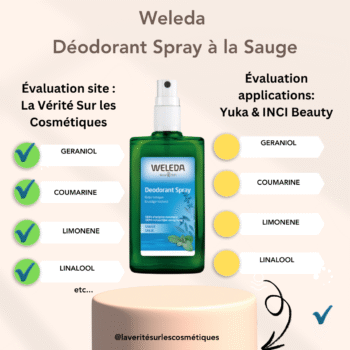
As health-conscious consumers move away from synthetic ingredients, many turn to natural and certified organic cosmetics that use essential oils as alternatives to synthetic fragrances. Yet these same products are often poorly rated in consumer tests or cosmetic rating apps (like Yuka or INCI Beauty) due to the presence of so-called “potential allergens” such as linalool or geraniol—naturally occurring compounds in many essential oils.

Why Essential Oils Are Essential (and Natural) in Cosmetics

In organic certified beauty products, essential oils serve several functions: they provide natural fragrance, deliver active benefits (purifying, soothing, invigorating, etc.), and sometimes aid in product preservation. Organic standards or labels for natural and organic cosmetics prohibit many controversial synthetic preservatives and fragrances, making essential oils a preferred solution.


Replacing essential oils… with synthetic fragrance ?


To exclude essential oils entirely would mean returning to synthetic fragrances, often associated with problematic substances like phthalates (endocrine disruptors), synthetic musks (bioaccumulative), or other potentially toxic or polluting compounds.

Are All Essential Oil Components “Dangerous” ?

EU regulations require that certain “potential allergens” be listed on the label when their concentration exceeds a threshold. This applies to both synthetic fragrances and natural components found in essential oils (e.g., citral, limonene, geraniol).

But should these be categorically avoided?

Research such as the IVDK study in Germany shows that the allergenic potential varies greatly among substances. Some frequently used compounds have very low rates of allergic reaction.

🔬1) IVDK Study on Essential Oil Sensitization (2010–2019)

This study analyzed patch test data from 10,930 patients exposed to 12 different essential oils. Only 8.3% had a positive reaction to at least one oil. Oils with slightly higher reaction rates (>1%) included ylang-ylang, citronella, jasmine absolute, sandalwood, clove, and neroli. The authors noted that sensitization to essential oils is relatively rare and more common in professional settings (e.g., massage therapists, beauticians).

🔗 Read the full study: PubMed

🔬2) Study on Geraniol: Comparing Natural and Synthetic Forms

Another study looked at geraniol, a compound found in several essential oils. It revealed that oxidized geraniol (synthetic form) caused significantly more allergic reactions than its pure form. For example, 0.55% of patients reacted to oxidized geraniol, compared to only 0.13% for pure geraniol.

🔗 Read the study: PubMed

This highlights the need to distinguish between natural and synthetic components of essential oils when discussing skin sensitization. While some reactions can occur, the allergenic potential is generally low and depends on multiple factors including the compound’s form and usage context.

huiles essentielles & cosmétiques
huiles essentielles et allergie

This highlights the need to distinguish between natural and synthetic components of essential oils when discussing skin sensitization.

While some reactions can occur, the allergenic potential is generally low and depends on multiple factors including the compound’s form and usage context.

An Exaggerated Fear of Essential Oils?

Rejecting all products containing essential oil components due to possible allergens seems excessive. In truth, any substance—natural or not—can cause a reaction in sensitive individuals. Just as one avoids strawberries or citrus if allergic, consumers can choose cosmetic products with essential oils suited to their skin profile.

Mentions of components like “geraniol,” “linalool,” or similar are valuable pieces of information—for those who are directly affected. But for everyone else, they’re not particularly relevant.

It’s a bit like the label “contains hazelnuts” on your favorite chocolate bar. It’s crucial for people with a hazelnut allergy, but for others, it doesn’t really matter.

The Role of the French Essential Oils Consortium

The French Essential Oils Consortium (Consortium Huiles Essentielles) emphasizes that essential oils, while natural, are powerful substances that require careful use. Most reported adverse effects are due not to well-formulated cosmetics, but to misuse: applying oils undiluted, excessive self-medication, oral ingestion without supervision, or inappropriate use on children and pregnant women.

In fact, around 90% of reported side effects are linked to improper usage (source: poison control centers in France). Moreover, only about 3.5% of the population in France for example is allergic to fragrance, and only a small portion of those allergies are related to essential oils.

A Rational Approach: Key to Preserving Essential Oils in Cosmetics

Most risks come from misuse—not from the presence of essential oils in properly formulated cosmetics. A reasoned, evidence-based approach would help prevent media distortions and preserve the value of essential oils in clean beauty.

So the real question is: what do we use instead? 

Formulas without essential oils, but with synthetic fragrances containing far more controversial substances?

📱 Cosmetic Rating Apps: A Skewed Perspective on Essential Oils?

Apps like Yuka, INCI Beauty, Clean Beauty, and QuelCosmetic have become popular tools for evaluating cosmetic formulations. However, their scoring systems often penalize products containing natural essential oil components like linalool, citral, or geraniol, simply because these are listed allergens—without considering actual concentrations, real-world allergenicity, or the context of use.

As a result, a natural product containing essential oils at safe levels may receive a lower score than a synthetic formula, simply because of the presence of listed components.

For consumers seeking environmentally friendly and physiologically respectful cosmetics, it is essential not to rely solely on app scores, but to understand the context of essential oil use, their natural origin, their function (active ingredient, fragrance, preservative), and especially their real concentration in the formula.

As a result :

A natural product containing essential oils at safe levels may receive a lower score than a synthetic formula, simply because of the presence of listed components.

For consumers seeking environmentally friendly and physiologically respectful cosmetics, it is essential not to rely solely on app scores, but to understand the context of essential oil use, their natural origin, their function (active ingredient, fragrance, preservative), and especially their real concentration in the formula.

Allergènes huiles essentielles Yuka et INCI Beauty

Conclusion: Reclaiming Essential Oils in Natural Beauty

Equating essential oils with toxic synthetic components is a flawed comparison. While a minority of people may react to certain essential oil compounds, these are natural, well-studied ingredients used in small concentrations.

Essential oils are essential to the integrity of organic and natural cosmetics. Systematically excluding them under the guise of precaution would mean abandoning a well-documented, plant-based alternative in favor of potentially more harmful synthetic options.

SOURCES :

  • https://eur-lex.europa.eu/legal-content/FR/TXT/PDF/?uri=CELEX:32023R1545
  • https://pubmed.ncbi.nlm.nih.gov/35417610/
  •  https://www.consortium-he.org/2019/04/24/demeler-le-vrai-du-faux/ 
  •  https://onlinelibrary.wiley.com/doi/10.1111/j.1600-0536.2012.02079.x
  •  https://www.cosmebio.org/fr/nos-dossiers/2018-09-allergenes-parfum-cosmetique/

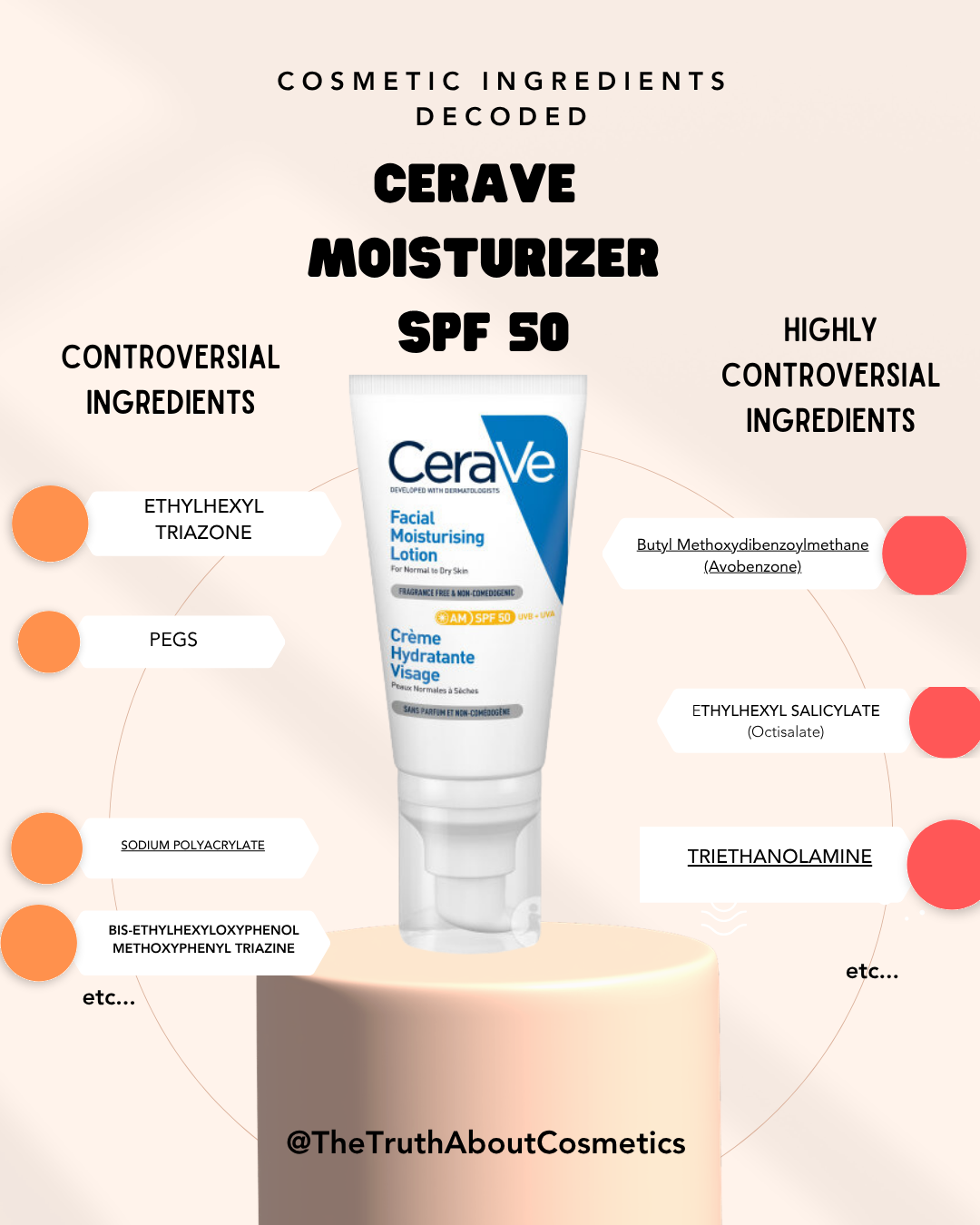
CeraVe , a brand recommended by dermatologists, yes but…

When it comes to achieving healthy, balanced skin, many people trust the guidance of dermatologists. And often, the products they recommend – like the CeraVe Ultra-Light Moisturizing Lotion – are seen as safe, effective, and suitable for sensitive skin. 

But here’s the real question: does a “dermatologist-recommended” label automatically mean the product is the best choice, especially when it might include controversial or environmentally harmful ingredients? Let’s have a closer look at the CeraVe Ultra-Light Moisturizing Lotion.

Why Is CeraVe Ultra-Light Moisturizing Lotion So Popular?

Developed with dermatologists, CeraVe Ultra-Light Moisturizing Lotion is marketed as a lightweight, non-comedogenic facial moisturizer that hydrates while providing SPF protection.  Its formula includes key ingredients like ceramides and hyaluronic acid—both known to support the skin’s natural barrier and moisture levels.

This product is often recommended for daily use, especially for those with combination or oily skin types, thanks to its matte finish and non-greasy feel.

Heres how the brand presents the product on its website:

« CeraVe Ultra-Light Moisturizing Lotion for normal to oily skin includes broad spectrum SPF 30 sunscreen to help protect skin from sun damage, which can lead to premature signs of aging and skin cancer (when used as directed with other sun protection measures) plus hyaluronic acid and three essential ceramides to hydrate and help restore the skin’s barrier all while leaving a matte finish. »

CeraVe Ultra-Light Moisturizing Lotion

A Closer Look at the Ingredient List

Let’s examine the product’s ingredient list

Active Ingredients:

– Avobenzone 3% 

– Homosalate 10% 

– Octisalate 5% 

– Octocrylene 2.7%

Inactive Ingredients (partial list)

Water, Glycerin, C12-15 Alkyl Benzoate, Methyl Methacrylate Crosspolymer, Ceramide NP, Ceramide AP, Ceramide EOP, Sodium Hyaluronate, Cholesterol, Carbomer, Phenoxyethanol, Disodium EDTA, Hydroxyacetophenone, Sodium Polyacrylate…

Ingredient analysis

At first glance, you’ll notice beneficial ingredients like glycerin, ceramides, and sodium hyaluronate—all excellent for supporting hydration and barrier function. However, a closer inspection reveals several problematic ingredients that are widely debated in skincare and environmental circles.

Controversial Ingredients in CeraVe Ultra-Light Moisturizing Lotion

While CeraVe Ultra-Light Moisturizing Lotion is praised for its lightweight formula, it includes a number of ingredients that have raised concerns:

  • Homosalate – a UV filter under scrutiny as a potential endocrine disruptor
  • Octisalate (Ethylhexyl Salicylate) – also flagged for its hormonal activity.
  • Avobenzone – a common chemical sunscreen ingredient, suspected of hormone disruption.
  • Octocrylene – linked to environmental toxicity and potential bioaccumulation.
  • Carbomer – not dangerous to skin but known to be non-biodegradable and polluting.
  • Methyl Methacrylate Crosspolymer – a microplastic-like film-former harmful to marine ecosystems.
  • Disodium EDTA – environmentally persistent and not biodegradable.
  • Phenoxyethanol – a widely used preservative, but restricted in concentration in the EU due to irritation risks and other health concerns.
  • Sodium Polyacrylate – synthetic, with known environmental concerns.

The Verdict: Trusted by Dermatologists, But Far From Perfect

CeraVe Ultra-Light Moisturizing Lotion may be widely recommended and even well-tolerated by many—but that doesn’t make it flawless. 

Its formulation includes both beneficial skincare ingredients and a range of controversial chemical agents—some with potential hormonal impacts, and others with well-documented environmental drawbacks. While it offers hydration and sun protection in a lightweight format, it also contains questionable compounds that may not align with organic or natural beauty values or the needs of truly sensitive skin.

What Should People with Sensitive or Reactive Skin Look For Instead?

Sensitive and reactive skin types require extra care when choosing skincare products. Even ingredients that are technically safe or approved may cause irritation, redness, or allergic reactions on delicate skin.

Although CeraVe Ultra-Light Moisturizing Lotion contains soothing ingredients, the presence of controversial chemical sunscreens and synthetic polymers makes it a less-than-ideal choice for people with high sensitivity or a preference for eco-friendly skincare.

It’s also important to remember: 

> Every skin is unique. What works for one person—even if dermatologist-recommended—may not suit another, especially when you factor in things like climate, hormones, stress, or overall health.

Cleaner Alternatives to CeraVe Ultra-Light Moisturizing Lotion

If you’re looking to avoid endocrine disruptors, synthetic preservatives, and microplastics consider switching to certified natural or organic skincare brands. These products are basically formulated with gentle, non-irritating ingredients and do not allow problematic UV filters, harsh preservatives or other highly problematic and controversial ingredients. For example, brands like BIOTURM, MADARA or Pai Skincare offer moisturizers specifically designed for sensitive or allergy-prone skin, using soothing botanical ingredients and innovative formulations.  They may not always offer SPF, but layering them with a natural mineral sunscreen is a safer, customizable approach.

Final Thoughts

CeraVe Ultra-Light Moisturizing Lotion may be convenient, widely available, and approved by professionals—but it’s important to look beyond the label. 

Especially if you have sensitive skin, environmental concerns, or are committed to avoiding harmful ingredients in beauty products, the presence of questionable ingredients in this popular product might give you pause.In today’s world, where both personal health and environmental sustainability matter more than ever, taking the time to research your skincare products—and choosing formulas aligned with your values and needs—is not just a luxury. It’s essential.

How to Make Safer Beauty Choices


If you’re looking to avoid controversial ingredients in your skincare or makeup routine, start by mastering a few essentials:

  • Learn how to analyse cosmetic ingredient lists and identify potential irritants or endocrine disruptors.
  • Understand the meaning behind cosmetic certifications and safety labels.
  • Prioritise natural or certified organic formulas that exclude silicones, PEGs, synthetic fragrances, and chemical UV filters.

To guide you through this process, we’ve developed a complete Online Workshop designed to help you choose your products with clarity and confidence. Inside, you’ll learn how to:

  • Decode ingredient terminology like a pro.
  • Go beyond basic “toxic” lists and understand why certain substances are problematic.
  • Recognise reliable certifications and avoid misleading greenwashing.


How to choose cosmetics

How to care for your skin during the perimenopause?

Ah the perimenopause….we didn’t expect it… so soon!

Most of the time, as long as it doesn’t affect us, for example, we think of the menopause phase as a sort of “on off” button. One day, you wake up, your period’s over and you find yourself condemned to walk around with a fan because of hot flushes, just like in the movies or in advertising. The reality is a little more nuanced and complex and goes beyond perimenopause skin care.

From Perimenopause to Menopause

The transition phase from perimenopause (the phase before menopause) to menopause can last up to 10 years. In Europe and most of the Western world, the average age is between 45 and 55* (51 on average in France).  Do the math: the onset of perimenopause therefore often occurs around the age of 40, and sometimes even earlier.

*(source: INSERM , WHO, etc ).  

Many things change in (peri)menopause, in this article we will also have a closer look at the best perimenopause skin care. 


Perimenopause skin care: an all-encompassing upheaval that affects more than just the skin

During perimenopause, the female body undergoes a series of changes that mark the transition to menopause. At this point, production of the main female hormones, estrogen and progesterone, fluctuates intensely, and then gradually declines over time. And this transition period marks significant hormonal changes that affect skin, hair and general health, as well as mood and mental health. 

Additionally, if you’re feeling a little overwhelmed during this period, and health care providers aren’t necessarily providing you with the answers to your (peri)menopausal problems, don’t hesitate to get informed and seek out more detailed information, available on various websites.


Perimenopause Skin Care
Perimenopause - the time before Menopause

Perimenopause skin care : changes in perimenopause

Hormonal fluctuations, particularly the drop in estrogen levels, can lead to drier, thinner skin, making it more prone to irritation and the appearance of wrinkles. Levels of elastin (which provides elasticity), hyaluronic acid (which helps retain and regulate moisture), certain vitamins and keratin also decline with age, which also weakens the skin’s outer protective barrier. 

External factors such as environmental pollution, weather conditions or bacteria can thus potentially more easily breach the protective barrier and subsequently damage the skin’s deeper layers. All these factors can further weaken the skin’s outer protective barrier (the famous hydrolipidic film). So it’s essential to adapt your skincare routine to meet your skin’s needs during this transitional phase.

In this article, we’ll guide you in choosing the adequate beauty products and cosmetics to use during the (peri)menopause, and also remind you of some controversial ingredients to avoid in cosmetic products. Skin care in perimenopause needs a slightly different approach.

Why does the skin become drier during perimenopause?

During perimenopause, the skin undergoes several transformations, mainly due to the decrease in female hormones, which play a key role in the production of collagen, elastin and sebum – essential for maintaining skin hydration and elasticity. Key skin changes include:

  • Skin dryness : reduced sebum levels make the skin drier.
  • Loss of elasticity : collagen levels fall, which can lead to skin slackening and the appearance of more pronounced wrinkles.
  • Increased sensitivity : skin becomes thinner, more fragile and reactive.
  • Blemishes: hormonal fluctuations can lead to blemishes, or even a flare-up of acne, as in adolescence.
  • Pigmentation spots : hormonal imbalances can lead to the appearance of brown spots
Skin changes in Perimenopause
Perimenopause : the skin needs change

Skin Care &  perimenopause : which products ?

Generally speaking, as the skin needs a little more care than before, beauty products rich in humectants and moisturizers, vegetable oils and butters, or glycerine, always make sense.

The importance of the « excipient », the base

Let’s not forget that a few isolated ingredients – however miraculous they may be – cannot guarantee a product’s “absolute efficacy”.

So we’re back to the same basic debate and question: what really determines a product’s efficacy? The answer is quite simple : it’s the base (also known as the “excipient”) of a formula that determines the quality and efficacy of a cosmetic product. In the words of K.P. Witten,  former Head of Development at Beiersdorf: “A quality excipient achieves 80% of the desired performance. Active ingredients, no matter how extraordinary, only account for the remaining 20%.” The quality of the care base is therefore paramount. And to assess the overall quality of a product, we of course add to the debate the absence of controversial components, genuinely problematic for health or questionable in environmental terms.

An quality beauty product that « works » = a product adapted to your needs

Besides, another key point is that an “effective” beauty product must also really correspond to the needs of the person and the condition of their skin… at the given time.  It may be that a skincare product is suited to your skin at a particular time of year, so it will be “effective” for you at that time. And your skin may have other needs at other times, so it’s time to change skincare products to find what’s most “effective” for you. One basic principle remains valid : listen to your skin’s needs, it’s always talking to you…

Which skincare products to choose for perimenopause? Here are a few tips…

The basic mixture (the excipient), preferably made up of precious plant-based oils or waxes (and not a mixture of mineral oils or silicones), can be complemented by interesting active ingredients such as hyaluronic acid or skin care products based on retinol and its derivatives, and antioxidants such as vitamins C and E to protect the surface, moisturize and hydrate deep down. 

Which could be the “best products” , the best skin care for perimenopausal skin?

Here’s a selection of products you can add to your beauty routine during perimenopause. But always listen to your skin’s real needs, without getting caught up in brand marketing pitches.

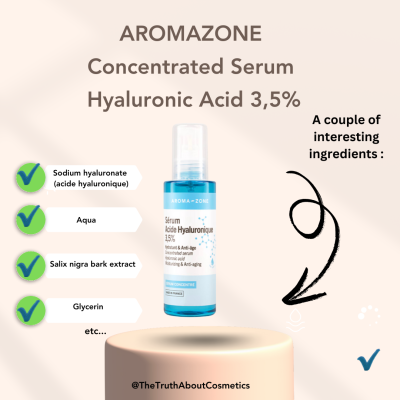
a) Add Serums based on hyaluronic acid

Hyaluronic acid is a molecule renowned for its ability to attract and retain water in the skin. Naturally present in the human body and in the skin, hyaluronic acid levels tend to decline over the years, leading progressively to skin slackening. An “external” contribution, via cosmetic products, therefore makes perfect sense.

Various studies have shown that using products containing hyaluronic acid can improve skin hydration and suppleness, thereby reducing the appearance of wrinkles. Hyaluronic acid-concentrated serums are therefore particularly suitable for perimenopausal skin, to compensate for moisture loss (or rather, the skin’s ability to maintain its moisture levels).

Product selection (by way of example) :

 
Hyaluronic Acid : perfect for skin care during permimenopause
Skin care routine in menopause : serum

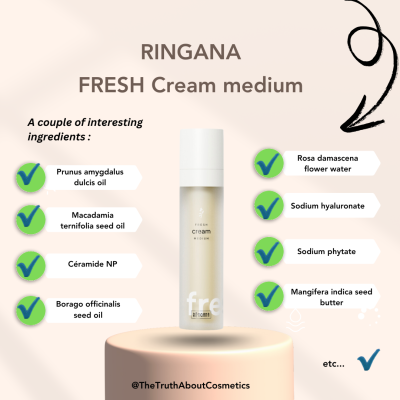
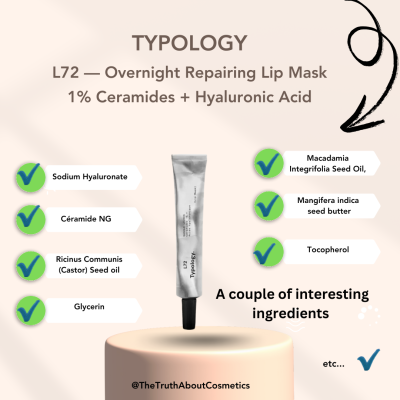
b)  Choose moisturizers rich in essential fatty acids and ceramides

To combat dryness, opt for moisturizers containing essential fatty acids such as omega-3, 6 and 9 (naturally already present in plant oils and waxes) and ceramides.  These lipids, already naturally present in the epidermis, help restore the cutaneous barrier, retaining moisture in the skin.

Product selection (by way of example) :


Copy of RINGANA Fresh Creal
Typology Lip Care

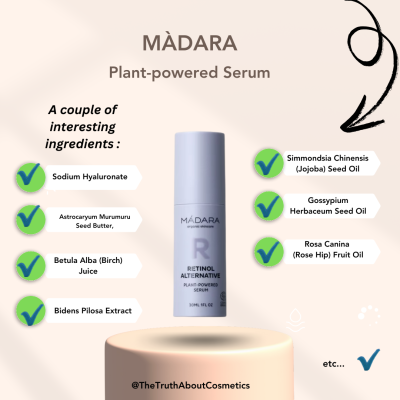
c) Testing products based on retinol or its derivatives

Retinol, a derivative of vitamin A, is one of the most widely studied « anti-aging » ingredients. This substance stimulates collagen production and accelerates cell renewal, helping to reduce the appearance of wrinkles and pigmentation spots. Several studies highlight retinol’s effectiveness in improving skin elasticity and epidermal density.  Retinol is of synthetic origin, and may not be suitable for all skin types.  Its use should be gradual, as it can sometimes irritate sensitive skin, causing sensations of irritation or even accentuating cutaneous dryness. It is also photo-sensitizing, which can cause brown spots on exposure to the sun.

What about alternatives to retinol?

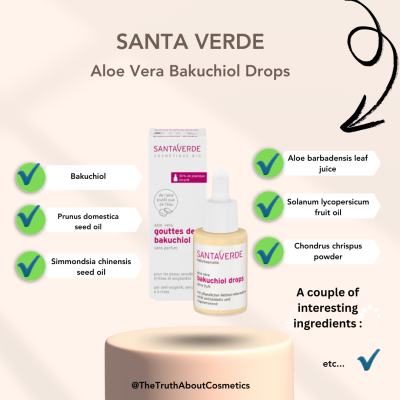
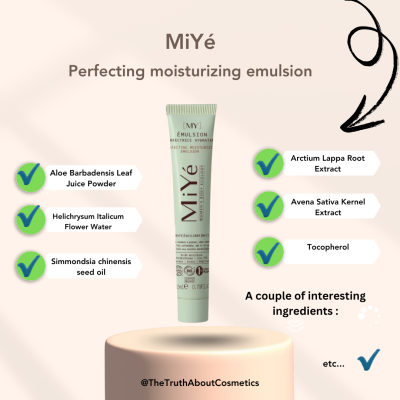
Often used in natural and organic cosmetics, Bakuchiol is a plant-based active ingredient generally extracted from the seeds of a herbaceous plant: Psoralea corylifolia . This 100% natural active ingredient boasts antioxidant and anti-inflammatory properties that soothe and slow down premature skin aging. Bakuchiol also appears to be effective in preventing excess sebum and the formation of skin imperfections, as well as blurring the intensity of hyperpigmentation marks. Other formulas based on plant extracts and other interesting substances can also “compete” with the benefits derived from synthetic Retinol.

Product selection (by way of example) :

 
MADARA plant-powered skincare for perimenopause
Santa Verde : plant-based retinol

4) Opt for antioxidant skin care products such as vitamins C and E

Antioxidants neutralize the free radicals responsible for premature skin aging. Vitamin C, for example, is particularly effective in evening out skin tone and reducing dark spots. Some studies have shown that topical application of vitamin C can promote collagen production. As for vitamin E, it helps strengthen the skin barrier and soothe irritation.

The importance of collagen

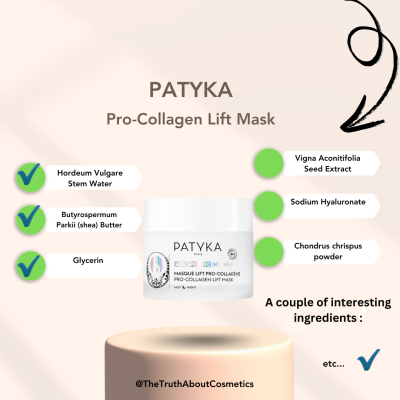
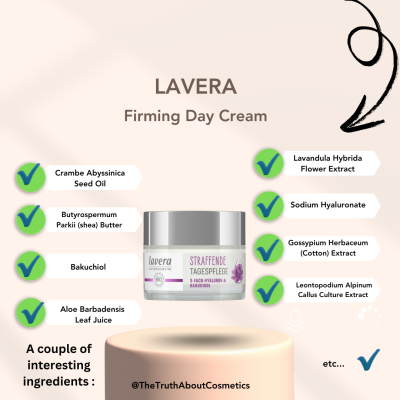
As a matter of fact, as we age, it’s normal and natural for collagen levels in our bodies to decline. Collagen levels begin to decline by around 1% every year from the age of 25. During the perimenopause phase, the skin loses around 30% of its collagen. Darker skins, naturally richer in collagen, retain their structural integrity and youthful appearance longer than lighter skins. Adding collagen in the form of dietary supplements can be an interesting additional solution. (see nutrition, below).

Product selection (by way of example) :

Patyka Pro Collagen for (peri)menopause
Lavera Firming Day Cream

Perimenopause and imperfections… the return of hormonal acne?

The inconveniences of the (peri)menopause are sometimes accompanied by skin imperfections and even acne flare-ups, similar to those seen in adolescence.

This is due to a reduction in the production of estrogen and progesterone, which help maintain a balanced inflammatory system. And the gradual decline in estrogen, which no longer counterbalances androgen secretion. Taking care of imperfections during perimenopause is important, but certainly not with just any product. After all, products for skin imperfections, such as those used during adolescence, are often far too aggressive and further disrupt the skin’s precious hydrolipidic film. There are now also specific products for the imperfections of mature skin, including organic cosmetics.

Product selection (by way of example) :


Miyé-perfecting-emulsion.jpg
PHYT's Aromaclear Mattifying Cream for hormonal imbalances

How to adapt your beauty routine to the (peri)menopause ?

 What would be the most suitable perimenopause skincare ?

For women in perimenopause and even menopause, the approach is relatively simple: favor cosmetics that are both gentle and moisturizing, while avoiding ingredients likely to further unbalance the metabolism or irritate the skin.

Ingredients to avoid in perimenopause

Which ones do you think they are?

All the controversial ingredients you’d do well to avoid for the rest of your life!

Focus on a few groups of problematic, potentially toxic and polluting ingredients. There’s no need to learn this list by heart – it’s bound to be incomplete, given the number of controversial ingredients that can be found in conventional cosmetics.

Remember : dont over simplify

This list is by no means exhaustive, and represents only a fraction of the problematic ingredients that can be found in cosmetics and beauty products in general. The issue itself is quite complex, as there are many problematic and controversial compounds at various levels in different categories of beauty products. The subject should therefore not be oversimplified and reduced to a few harmful ingredients.

There are, however, a few categories of highly problematic components, such as the following:

Educate Yourself on Controversial Ingredients

Start your journey by getting informed about controversial ingredients commonly found in beauty products. You can use the website’s free INCI research tool and dive deeper into the subject with the different articles on the website.

1. Educate Yourself on Endocrine Disruptors

Endocrine disruptors are harmful chemicals present in various beauty products. These chemicals can interfere with your hormonal balance and potentially lead to serious health issues. It is never enough to choose beauty products labeled as « paraben-free » as the products can still contain other endocrine disruptors or harmful ingredients. Certified organic cosmetics however, provide more guarantees, endocrine disruptors are simply not allowed in the formulation process by the different labels. If the product is not certified, make sure to check the ingredient list.

2. Avoid Silicones and mineral-oil derived ingredients (Petrolatum, etc)

Mineral oils and silicones are still widely used in cosmetics. In general, silicones take a heavy toll on the environment, as they are not, or only to a very limited extent, biodegradable. Some silicones (such as cyclopentasiloxane (D5), for example) are also considered potential endocrine disruptors.

Mineral oils are also widely used in cosmetics today, as they are less expensive than vegetable oils or waxes. Fragrance-free and colorless, they can easily be stored for long periods. These mineral oils used in cosmetics are derived from petroleum (= fossil fuels) and also represent a disastrous ecological balance sheet.

Moreover, mineral oils do not offer the same “skincare quality” as genuine vegetable oils or waxes, and can pose problems on a number of levels. For example, they may contain impurities such as MOSH and MOAH. These are aromatic hydrocarbons, substances classified as potentially carcinogenic, with a problem of accumulation in tissues.

3. Stay Away from PFAS (Perfluoroalkyl Substances)

PFAS (also known as « Forever Chemicals »)  are a group of chemicals used in many industries, including cosmetics. They have been linked to adverse health effects and are extremely persistent in the environment. This is a tremendous environmental concern, which of course concerns many other industries. Check the ingredient list for PFAS-related compounds like PTFE or perfluorooctanoic acid (PFOA) and educate yourself on the subject as well.

4. Be Mindful of certain synthetic Preservatives

Preservatives are essential to prevent the growth of harmful bacteria and extend the shelf life of cosmetics. However, some synthetic preservatives, such as formaldehyde releasers or phenoxyethanol have been linked to skin irritations and allergies and other more serious health concerns. Others fall into the category of endocrine disruptors (some parabens, triclosan, BHT etc).

The importance of lifestyle in perimenopause

Beyond the question of which beauty products to use during perimenopause, let’s not forget that cosmetics are only part of the global picture. To get better and cope better with the symptoms, you should (re)consider your daily lifestyle : diet, stress management, sleep, physical activity, alcohol and tobacco consumption, social ties, etc., etc… The classics !

Skincare in Perimenopause food

Can diet influence what the skin looks like during perimenopause?

In addition to skin care, diet plays a crucial role in maintaining skin and body healthy during perimenopause. A diet rich in antioxidants, vitamins (A, C, E) and omega-3 fatty acids can help support skin aging and maintain skin hydration. Foods such as oily fish (salmon, mackerel), nuts, fresh fruit and vegetables (especially berries, spinach, citrus fruits), and vegetable oils (olive oil, linseed oil) are considered particularly beneficial.

Food supplements specifically designed for (peri)menopause

Certain dietary supplements can also be of great help. Hydrolyzed collagen, for example, is often recommended to improve skin elasticity and firmness. Many of our body’s vital structures depend on collagen for strength and support. Collagen is an important building block of our skin, bones, muscles, tendons, ligaments, blood vessels, corneas and teeth. Collagen therefore plays an essential role in maintaining the suppleness and hydration of all these body parts.

Phytoestrogens (found naturally in flaxseed, soy or in the form of dietary supplements) can also help compensate for the drop in estrogen. Finally, vitamin D and calcium are essential for bone health, which can be affected by hormonal fluctuations, while probiotics support digestion and can contribute to better absorption of nutrients beneficial to the skin.

How can dietary supplements help perimenopausal skin?

Adopting a balanced diet and taking the right supplements can not only improve the appearance of the skin, but also support overall health during this transitional phase.

.

 Frequently Asked Questions About Perimenopause Skincare

What happens to the skin during perimenopause?

Hormonal fluctuations during perimenopause can lead to dryness, loss of elasticity, increased sensitivity and adult acne due to declining estrogen levels, among other hormonal changes.

What is the best skincare routine during perimenopause?

A perimenopause skincare routine should focus on gentle cleansing, barrier repair, deep hydration and avoiding controversial ingredients that disrupt hormonal balance or other problematic components.

Can perimenopause cause sudden acne or skin sensitivity?

Yes. Hormonal imbalance can trigger breakouts, redness and increased skin reactivity even in people who never had sensitive skin before.

Which ingredients should be avoided during perimenopause?

It is recommended to avoid harsh exfoliants, overly fragranced products (synthetic fragrances) and potential endocrine disruptors that may interfere with hormonal balance.

Should skincare change at the start of perimenopause?

Yes. Adjusting skincare early can help prevent long-term skin issues and better support hormonal skin changes. But keep in mind that every person’s overall needs and skin changes will be different.

Conclusion : perimenopause skin care

Perimenopause is a pivotal phase in a woman’s life, and the skin’s needs will evolve with hormonal changes. Adapting your skincare routine with specific moisturizing and protective products can help preserve the skin’s radiance and health.

Furthermore, avoiding controversial, potentially toxic ingredients on a daily basis (and not just in cosmetics!) remains essential to limit potential health risks in general, and preserve hormonal balance wherever possible.

Adopting the right gestures and choosing the adequate beauty products is part of the process. The other part would be to find the perfect personal “lifestyle” formula for your daily life at this stage (diet, physical activity, etc.). The one that will enable you to get through this period a little more serenely, while taking care of yourself. And don’t forget that many other women will be confronted with similar problems, so exchanging on the subject will be part of the program to get better!

Skincare perimenopause and menopause
Perimenopause skincare for sensitive skin
perimenopause, beyond skincare

 Switching to non toxic beauty products, face moisturizers in review

In recent years, there has been a growing concern about the potentially harmful chemicals found in many beauty products. From endocrine disruptors to PFAS, silicones, phthalates or parabens (just to name the most infamous ones) there are a plethora of ingredients in conventional cosmetics that have been linked to negative health effects or cause considerable harm to the environment (also harming both humans and animals again, in the end). For those looking to switch to safer alternatives, the world of non toxic beauty products offers an interesting  panel of alternatives.

But before we have a closer look at the products themselves and alternatives to non toxic produits, let’s review a couple of ingredient groups that should be avoided in beauty products.

Focus on some problematic, potentially toxic and polluting groups of ingredients

Please keep in mind that this list is absolutely not complete and represents only a part of controversial ingredients that can be found in cosmetics and beauty products . The issue in itself is quite complex as there are numerous problematic compounds ind beauty products and the subject should therefore not be over-simplified and reduced to a couple of harmful ingredients.

There are however large groups of highly problematic components, like the following ones.

Endocrine disruptors

Endocrine disruptors, -substances that interfere with our hormones-, can be found in numerous everyday objects (e.g. cosmetics, pesticides, detergents, plastics, furnishing, medicine, textiles, etc.).

And their impact on health?

Theses substances can impact health on numerous levels, for example by modifying the natural production of our intrinsic hormones (oestrogen, testosterone) mimicking the action of these hormones or blocking or preventing the action of these hormones, by attaching themselves to the receptors with which they usually interact.

Hormonal interferences

All these hormonal interferences can be linked to important health problems such as, hormone-dependent cancers, infertility problems, earlier puberty and other diseases such as diabetes/obesity, etc. For more in detail information, you can read the full article including more details.

PFAS -also called « Forever Chemicals »

PFASs, poly- and perfluoroalkyl substances (aka Forever Chemicals), are chemical substances consisting of about 4,000 to 6,000 different components. PFASs are extremely persistent, spread rapidly and are not or only very partially, biodegradable. These substances can be found in many everyday products like textiles, food packaging, cosmetics, pesticides, kitchen utensils, varnishes and numerous other common items.

All things considered, what are the health risks for PFAS?

As PFAS are not destroyed in the human body, they tend to bioaccumulate and therefore increase health risks. Numerous PFASs are strongly suspected of being toxic, with health risks to humans, animals and the environment.

These include effects on the hormonal system (acting again as endocrine disruptors), the immune system, reproduction and unborn child development. The exact properties differ for each specific PFAS. These substances can accumulate in the human body, in animals and in plants.

Mineral oils and silicones

Both  mineral oils and silicones are commonly used in beauty products to create a smooth texture and long-lasting effects. In general, silicones represent a huge toll on the environment, as they are not biodegradable. Some silicones (like Cyclopentasiloxane (D5), for instance) are also potential endocrine disruptors. Mineral oils used in cosmetic products are derived from petroleum (= fossil fuels). They are still widely used in cosmetics, as they are cheaper than vegetal oils or waxes, fragrance free and colourless,  and can easily be kept over a long time.

Mineral oils do not offer the same quality of care as genuine vegetable oils or waxes, and can pose problems on a number of levels. Mineral oils can, for instance, sometimes contain impurities such as MOSH and MOAH. These are aromatic hydrocarbons, substances classified as potentially carcinogenic, with the problem of accumulation in tissues.

Certain synthetic preservatives

In order to prevent the growth of harmful bacteria and extend the shelf life of cosmetics, preservatives are essential in beauty products. However, some synthetic preservatives, such as formaldehyde releasers or phenoxyethanol have been linked to skin irritations and allergies and other more serious health concerns. Others fall into the category of endocrine disruptors (like some parabens, triclosan, BHT, BHA etc).


What are the alternatives, then ?

Where are the non toxic beauty products ?

As awareness of these harmful ingredients grows, many consumers are turning to organic and certified cosmetics as a safer alternative.

Organic certified cosmetics are made using primarily natural ingredients that are free of controversial synthetic chemicals, pesticides, and genetically modified organisms. But they go even further as they exclude an extensive list of problematic, toxic, potentially harmful and polluting ingredients or  processes.

Certified cosmetics follow strict guidelines to ensure that they are free of toxic chemicals and are safe for use on both the skin and the environment. These products are always certified by third-party organizations to ensure their alignment with the label’s guidelines and safety principles. When making the switch to non toxic beauty products, it’s important to read labels carefully and research brands that exclude controversial components and prioritize safe ingredients.

Switching to non toxic beauty products may seem daunting at first, but the benefits are well worth the effort. Not only will you be reducing your exposure to potentially harmful chemicals, but you’ll also be supporting brands that prioritize the health and well-being of their customers.


Comparaison of Face Moisturizers : from toxic to non toxic products – ingredient check

We have selected a few random face moisturizes, both from the conventional and the organic certified sector in order to illustrate how different the product formulations can be…


CHARLOTTE’S MAGIC CREAM

30 ML MOISTURISER

£52.00

Charlotte Tillbury Magic Cream review


This products includes, for example,  the following controversial, potentially toxic ingredients, (including endocrine disruptors) like  :

Charlotte Tillbury Magic Cream : formulation?
Charlotte Tillbury Magic Cream ; ingredient list?

Ingredient list /INCI

AQUA/WATER/EAU, HOMOSALATE, GLYCERYL STEARATE SE, ETHYLHEXYL SALICYLATE, BUTYLENE GLYCOL, GLYCERIN, BUTYL METHOXYDIBENZOYLMETHANE, OCTOCRYLENE, CETYL ALCOHOL, C12-15 ALKYL BENZOATE, CYCLOPENTASILOXANE, DIMETHICONE, PHENOXYETHANOL, BUTYROSPERMUM PARKII (SHEA) BUTTER, STEARETH-21, AVENA SATIVA (OAT) KERNEL EXTRACT, CARBOMER, DIMETHICONOL, POTASSIUM CETYL PHOSPHATE, CHLORPHENESIN, CAPRYLYL GLYCOL, XANTHAN GUM, HYDROLYZED VIOLA TRICOLOR EXTRACT, ALLANTOIN, ALOE BARBADENSIS LEAF JUICE, DISODIUM EDTA, TOCOPHERYL ACETATE, CAMELLIA OLEIFERA SEED OIL, ROSA CANINA FRUIT OIL, ROSA DAMASCENA EXTRACT, SODIUM HYDROXIDE, HELIANTHUS ANNUUS (SUNFLOWER) SEED OIL, MICHELIA ALBA LEAF OIL, SODIUM LACTATE, COCO-GLUCOSIDE, PEG-8, ETHYLHEXYLGLYCERIN, SODIUM HYALURONATE, TOCOPHEROL, PALMITOYL TETRAPEPTIDE-7, PALMITOYL TRIPEPTIDE-1, ASCORBYL PALMITATE, PLUMERIA RUBRA FLOWER EXTRACT, ASCORBIC ACID, CITRIC ACID, NICOTIANA SYLVESTRIS LEAF CELL CULTURE, LINALOOL, CITRONELLOL, GERANIOL.


CLARINS

Multi-Active Crème Jour SPF15

71€

Clarins Multi Actif Jour Formulation ?

This products includes, for example, the following controversial, potentially toxic ingredients, including endocrine disruptors like  :


  • HOMOSALATE
  • DIMETHICONE
  • OCTOCRYLENE
  • BUTYL METHOXYDIBENZOYLMETHANE
  • PEG-100 STEARATE
  • POLYSILICONE-15
  • DIMETHICONOL
  • CHLORPHENESIN
  • DISODIUM EDTA

etc


Clarins Multi Active Day Cream : formulation ?

Ingredient list /INCI

AQUA/WATER/EAU. COCO-CAPRYLATE/CAPRATE. GLYCERIN. BETAINE. CETEARYL ALCOHOL. NIACINAMIDE.DIMETHICONE. GLYCERYL STEARATE. PEG-100 STEARATE. CETEARYL ETHYLHEXANOATE. AMMONIUM ACRYLOYLDIMETHYLTAURATE/VP COPOLYMER. CETEARYL GLUCOSIDE. PROPYLENE GLYCOL. PARFUM/FRAGRANCE. CAPRYLYL GLYCOL. DIPSACUS SYLVESTRIS EXTRACT. HYDROXYACETOPHENONE. MICA. CI 77891/TITANIUM DIOXIDE. POLYSILICONE-11. CHLORPHENESIN. TOCOPHERYL ACETATE. BUTYLENE GLYCOL. DISODIUM EDTA. CAPRYLIC/CAPRIC TRIGLYCERIDE. CITRIC ACID. TOCOPHEROL. ERYNGIUM MARITIMUM EXTRACT. MARRUBIUM VULGARE EXTRACT. PHENETHYL ALCOHOL. DECYL GLUCOSIDE. FURCELLARIA LUMBRICALIS EXTRACT. SODIUM CITRATE. ARBUTUS UNEDO FRUIT EXTRACT. LAPSANA COMMUNIS FLOWER/LEAF/STEM EXTRACT. MARIS SAL/SEA SALT/SEL MARIN. CI 17200/RED 33. [V4298A]


PHYT’S

Panacée – La Crème

Anti-âge global d’exception

92,80€

Phyt's la crème Panacée : ingredients ?


In this certified organic face cream there are no controversial, harmful or toxic ingredients.

An entire list of plant-based, mainly organic ingredients provide quality care for mature skin, like for example the following ones.


  • Aloe barbadensis leaf extract*
  • Acacia decurrens flower wax
  • Acmella oleracea extract
  • Secale cereale (Rye) seed extract*
  • Boerhavia diffusa root extract
  • Algae extract
  • Leontopodium alpinium extract*
  • Helianthus annuus (Sunflower) seed oil*
  • Rosmarinus officinalis (Rosemary) leaf extract*

PHYT'S Panacée Cream : formulation ?

Ingredient list /INCI

Aloe barbadensis leaf extract*, caprylic/capric triglyceride, aqua/water/eau, propanediol, parfum (Fragrance), Jojoba esters, C12-16 alcohols, Helianthus annuus (Sunflower) seed wax, cetearyl alcohol, glyceryl stearate citrate, glycerin, magnesium aluminium silicate, Acacia decurrens flower wax, Acmella oleracea extract, Secale cereale (Rye) seed extract*, Boerhavia diffusa root extract, Algae extract, Leontopodium alpinium extract*, Helianthus annuus (Sunflower) seed oil*, Rosmarinus officinalis (Rosemary) leaf extract*, Adenosine, silica, xanthan gum, cetyl alcohol, polyglycerin-3, hydrogenated lecithin, palmitic acid, sodium stearoyl glutamate, microcrystalline cellulose, cellulose gum, sodium benzoate, benzyl alcohol, dehydroacetic acid, potassium sorbate, citric acid, sodium hydroxide, CI 77891, CI 77491, CI 77499, CI 77007, benzyl benzoate°, benzyl salicylate°, mitral°, citronellol°, eugenol°, farnesol°, limonene°, linalool°.

*ingrédient d’origine Biologique °ingrédient naturellement présent dans les matières premières


PATYKA

Multi protection Radiance Cream

24,50€

Patyka Défense Active Cream : formulation ?


In this certified organic face cream there are no controversial, harmful or toxic ingredients.

An entire list of plant-based, mainly organic ingredients provide quality care, like for example the following ones.

  • Sesamum Indicum (Sesame) Seed Oil
  • Vaccinium Macrocarpon (Cranberry) Fruit Water
  • Hordeum Vulgare Stem Water, Aqua (Water)
  • Oryza Sativa (Rice) Hull Powder
  • Marrubium Vulgare Extract
  • Helianthus Annuus (Sunflower) Seed Oil, Hydrolyzed Algin
  • Lycium Barbarum Fruit Extract

Patyka Radiance Cream : formulation ?

Ingredient list /INCI

Hordeum Vulgare Stem Water, Aqua (Water), Sesamum Indicum (Sesame) Seed Oil, Vaccinium Macrocarpon (Cranberry) Fruit Water, Glycerin, Alcohol Denat., Microcrystalline Cellulose, Glyceryl Stearate Citrate, Oryza Sativa (Rice) Hull Powder, Parfum (Fragrance), Sodium Stearoyl Lactylate, Glyceryl Caprylate, Glyceryl Stearate, Levulinic Acid, Xanthan Gum, Lysolecithin, Sclerotium Gum, Pullulan, Sodium Levulinate, Sodium Hydroxide, Cellulose Gum, Citric Acid, Sodium Hyaluronate, Potassium Sorbate, Sodium Benzoate, Marrubium Vulgare Extract, Helianthus Annuus (Sunflower) Seed Oil, Hydrolyzed Algin, Sodium Phytate, Tocopherol, Phenethyl Alcohol, Saccharide Isomerate, Lycium Barbarum Fruit Extract, Alcohol


Conclusion :

By making the switch to non toxic beauty products, you can feel good about what you’re putting on your skin and take a step towards a healthier, more sustainable beauty. Making the switch to non toxic beauty products has never been easier today, as you can always find high quality alternatives without the harmful ingredients…

non toxic beauty products


Need Help Finding the Right Beauty Products?

We’ve got you covered with our brand-new Online Workshop!


How to Choose Non-Toxic Beauty Products (Without Falling for Greenwashing)
To avoid harmful chemicals in your cosmetics, you need to:

  • Learn how to read cosmetic labels and detect risky ingredients such as silicones, PEGs, parabens, or chemical UV filters.
  • Know which cosmetic certifications truly guarantee clean beauty standards.
  • Select natural or organic products with transparent ingredient policies.

“Choose the Right Beauty Products – With Ingredients in Mind”

We’ve created a complete Online Training to help you identify toxic-free beauty products with confidence. In this workshop, you’ll learn to:

  • Analyse cosmetic ingredients and spot hidden endocrine disruptors.
  • Go beyond simple “banned ingredients lists” and understand formulation logic.
  • Recognise trustworthy eco-certifications and avoid misleading claims.

How to choose Beauty Products ?