the truth about cosmetics

Why “Fragrance-Free” Isn’t Enough: Rethinking Cosmetic Safety Beyond Labels

Just going «fragrance-free » and avoiding parabens or phthalates is not enough…

But why ?

In the pursuit of healthier living and conscious consumerism, many individuals are turning their attention to the ingredients list on cosmetic products. Recognizing the potential harm of certain chemicals, consumers have become adept at avoiding well-known toxic ingredients. Fragrance-free cosmetics are not necessarily safe.

Relying solely on these recognized harmful substances is a limited approach.  There’s a deeper issue at play—the vast array of problematic ingredients that remain unregulated. This article explores why avoiding just a couple of harmful or toxic ingredients in cosmetics is not enough and delves into the unpredictable nature of unqualified, potentially toxic substances that might be lurking in our beauty products.

Hidden Hazards:

The cosmetics industry is a constantly evolving landscape, with new ingredients and formulations developed to meet changing consumer demands. The downside is that not all of these innovations undergo rigorous testing before hitting the shelves—even though there are significant differences on this point between Europe and the US.

But the problem remains the same on an international level: a large amont of tested substances that have identified health hazards still remain available for cosmetic formulations, sometimes with restrictions.

Consequently, consumers may be exposed to unforeseen health risks, especially when considering the potential synergistic effects of various chemicals present in a single product. Certain ingredients may have a limited potential toxicity on their own, but when combined with other problematic substances present in a product, they can create a harmful cocktail – known in the scientific community as the «cocktail effect». Without comprehensive testing of every possible combination, it becomes nearly impossible to predict the long-term effects of using a particular cosmetic product.

The Unseen Threat:

Consumers often focus on avoiding ingredients with well-documented harmful effects, such as parabens, phthalates, and fragrances, also because these are the substances that have come up a lot in the media lately. While this is a positive step, it’s crucial to recognize that the absence of these ingredients on a product label does not guarantee safety. Unregulated and under-researched substances may present risks that are not immediately apparent.

Additionally, the concept of “greenwashing” has become prevalent in the cosmetics industry, where products are marketed as «natural» or « formulated with organic ingredients », despite containing potentially harmful ingredients. This misdirection further complicates the task of informed decision-making for consumers.

Why Going Fragrance-Free Isn’t Enough to Avoid Potentially Toxic Ingredients in Cosmetics

As consumers become more informed about the chemicals in personal care products, “fragrance-free” has become a popular choice for those looking to reduce exposure to potentially toxic ingredients. While fragrance-free products are often safer for sensitive skin and a step toward minimizing certain allergens and endocrine disruptors like phthalates, this mention alone doesn’t guarantee safety from all harmful chemicals.

Toxic ingredients in fragrance-free cosmetics

Many products, even fragrance-free ones, may still contain concerning substances, including endocrine disruptors and PFAS (per- and polyfluoroalkyl substances), that carry long-term health risks.
fragrance-free cosmetics can be misleading
Fragrance-free cosmetics : not necessarily "safe".

Fragrance-free cosmetics are not necessarily “safe”.

When people choose fragrance-free products, they’re generally avoiding synthetic fragrances and perfumes known to cause skin irritation, allergic reactions and more serious health issues linked to endocrine disruption (phthalates = identified endocrine disruptors).

Fragrance-Free vs. Toxin-Free: Understanding the Difference

Unfortunately, even without added fragrance, these products may still contain chemical preservatives, plasticizers, ado dyes, microplastics and numerous other problematic synthetic chemicals. Endocrine-disrupting chemicals (EDCs), for example, are commonly found in cosmetics and can interfere with the body’s hormonal system, potentially leading to health problems like hormonal imbalances, reproductive issues, developmental disorders and more.

PFAS are another family of chemicals often overlooked in cosmetic products. These “forever chemicals” are valued for their durability and water-resistant properties, but they don’t break down easily and can accumulate in the body.  Some PFAS fall again into the endocrine disrupting category: PFAS exposure has been linked to immune system suppression, certain cancers, and other health risks.

But there are numerous other controversial, potentially toxic ingredients that can still be found in conventional cosmetics today.

Let’s take a substance like Triclosan -an antibacterial agent and preservative- as an example.

Triclosan (and its cousin Triclocarban)  has been identified as an extremely problematic substance, both in Europe, the US and elsewhere… but can still be found in numerous products on the market today.

In 2017 The Florence Statement on Triclosan and Triclocarban documented a consensus of more than 200 scientists and medical professionals on the hazards of and lack of demonstrated benefit from common uses of triclosan and triclocarban.

 « Based on extensive peer-reviewed research, this statement concludes that triclosan and triclocarban are environmentally persistent endocrine disruptors that bioaccumulate in and are toxic to aquatic and other organisms. »

In Europe, Triclosan has been evaluated under REACH, resulting in its classification as an endocrine-disrupting substance. But the substance can still be found in beauty products today, even if its use has been restricted.

Triclosan, once a common ingredient in antibacterial soaps and other personal care products, has been a subject of scrutiny due to its potential environmental and health risks. Consequently, Triclosan is restricted in cosmetic products in the EU. 

The following restrictions apply :

Max. 0.3% in toothpastes, hand soaps, body soaps and shower gels, deodorants (without sprays), facial powders and blemish correctors, nail products for cleaning fingernails and toenails prior to application of artificial nail systems. Not to be used in toothpastes intended for children under 3 years of age. Mandatory labeling for toothpastes containing triclosan: “Do not use in children under 3 years of age”.

The Limitations of Regulation, both in Europe (REACH) and the US (FDA)

REACH stands for Registration, Evaluation, Authorisation and Restriction of Chemicals and entered into force on 1 June 2007 in Europe. REACH places responsibility on industry to manage the risks from chemicals and to provide safety information on the substances. The regulation lays down a number of provisions and obligations for producers and importers of chemical substances, reversing the burden of proof from the public authorities to industry. In other words, it is now up to industry to demonstrate that its substance can be used without risk to human health or the environment.

Regulatory bodies, such as REACH in Europe and the FDA (Food and Drug Administration) in the United States, play a crucial role in safeguarding consumers by setting standards for cosmetic ingredients. But substances are often evaluated and regulated on different terms on an international level. One significant case that highlights the disparity in regulatory evaluation is Triclosan.

FDA  (US) approach on Triclosan

The United States for instance has taken a different approach. While the FDA has banned triclosan in over-the-counter antibacterial hand soaps, its use in other cosmetic and personal care products is not similarly restricted. 


When it comes to Triclosan the European approach seems more restrictive.  But it’s not always as simple as that.

The limitations, within the REACH system 

There are considerable limitations, even within the REACH system : many potentially toxic substances already on the market have not yet been assessed or regulated as strictly as they should. The varying standards between regions also raise concerns about the consistency of protection afforded to consumers and highlight the need for harmonized global regulations.

And simply « restricting » an identified endocrine disruptor within products won’t be enough, especially if we take the « cocktail effect » into account.
fragrance-free cosmetics are not necessarily safe

Fragrance-free cosmetics are not necessarily “safe”.

How to Choose Truly Safer Cosmetics

For consumers who want to avoid not only fragrance and just a couple of problematic, potentially toxic chemicals, here are a few steps to consider:

1. Educate Yourself on Controversial Ingredients

Read Beyond Labels: Start your journey by getting informed about controversial ingredients commonly found in beauty products. You can our website’s free INCI research tool and dive deeper into the subject with the different articles on the website.

2. Educate Yourself on Endocrine Disruptors

Endocrine disruptors are harmful chemicals present in various beauty products. These chemicals can interfere with your hormonal balance and potentially lead to serious health issues. It is never enough to choose products labeled as « paraben-free » « fragrance free», etc as the products can still contain other endocrine disruptors or harmful ingredients. Certified organic cosmetics however, provide more guarantees, endocrine disruptors are simply not allowed in the formulation process by the different labels. If the product is not certified, make sure to check the ingredient list.

 3. Avoid Silicones and mineral-oil derived ingredients (Petrolatum, Paraffinum etc)

Silicones are commonly used in beauty products to create a smooth texture and long-lasting effects. However, they represent a huge toll on the environment, as they are not biodegradable. Some silicones (such as cyclopentasiloxane (D5), for example) are also considered endocrine disruptors. Mineral oils are also widely used in cosmetics today, as they are less expensive than plant-based oils or waxes. These mineral oils used in cosmetics are derived from petroleum (= fossil fuels) and also represent a disastrous ecological balance sheet. Moreover, mineral oils do not offer the same “skincare quality” as genuine plant-based oils or waxes, and can pose problems on a number of levels. For example, they may contain problematic impurities such as MOSH and MOAH. These are aromatic hydrocarbons, substances classified as potentially carcinogenic, with a problem of accumulation in tissues. Again, silicones and mineral oil derived ingredients are not allowed in certified organic cosmetics.

 4. Stay Away from PFAS (Perfluoroalkyl Substances)

PFAS (also known as « Forever Chemicals »)  are a group of chemicals used in many industries, including cosmetics. They have been linked to adverse health effects and are extremely persistent in the environment. This is a tremendous environmental concern, which of course concerns many other industries. Check the ingredient list for PFAS-related compounds like PTFE or perfluorooctanoic acid (PFOA) and educate yourself on the subject as well.

5. Be mindful of certain synthetic Preservatives

Preservatives are essential to prevent the growth of harmful bacteria and extend the shelf life of cosmetics. However, some synthetic preservatives, such as formaldehyde releasers or phenoxyethanol have been linked to skin irritations and allergies and other more serious health concerns. Others fall into the category of endocrine disruptors (some parabens, triclosan, BHT etc).

6. Embrace Organic (certified!) Cosmetics

Choose Certified Brands and « certified organic »- products – brands which have certification seals from respected organic regulatory bodies. Brands with certifications, such as USDA Organic, COSMOS, Cosmébio, BDIH, NATRUE, SOIL Association, AIAB, Ecocert, etc have stricter ingredient policies.

5. Use Reliable Apps and Resources :

Besides the ressources you can find on our website : ingredient lists, in-depth articles, additional informations, (both available in french and english) tools like the EWG Skin Deep database provide information on potentially harmful ingredients, helping consumers make more informed choices.

Conclusion:  Beyond “Fragrance-Free” A Step Toward Safer Cosmetics

In the quest for safer cosmetics, it’s essential to go beyond avoiding a couple of well-known harmful ingredients. The ever-expanding list of cosmetic ingredients, coupled with the limitations of regulatory processes, underscores the need for a more vigilant and informed approach to beauty product choices.

Why fragrance-free cosmetics are not necessarily safe

Consumers should advocate for stronger regulations, increased transparency, and more rigorous testing of cosmetic ingredients. By supporting brands that prioritize safety and disclosure, individuals can contribute to a shift in industry standards. Ultimately, a comprehensive understanding of the potential risks associated with cosmetic ingredients will empower consumers to make informed choices, ensuring that the pursuit of beauty doesn’t compromise health.

Going fragrance-free and avoiding parabens and phthalates can be a good start toward reducing chemical exposure, but it’s not a complete solution for avoiding toxic ingredients. By staying informed about potentially harmful chemicals like endocrine disruptors and PFAS, reading labels carefully, and using resources that prioritize ingredient safety, consumers can make better choices and move closer to genuinely safer skincare and personal care routines.

❓ FAQ Fragrance-free cosmetics : are they safer ?

Are fragrance-free cosmetics always safer?

No. A fragrance-free label only indicates the absence of added perfume. These products may still contain endocrine disruptors, PFAS, acrylates, microplastics, silicones, and many other controversial ingredients.


Why is focusing only on fragrance misleading?

Because fragrance is just one potential issue among many. Cosmetic safety depends on the entire formulation, not on a single excluded ingredient.


Can fragrance-free products contain endocrine disruptors?

Yes. Many fragrance-free products still include substances suspected or known to disrupt hormonal balance, such as certain preservatives, UV filters, or synthetic polymers.


Are PFAS and microplastics found in fragrance-free cosmetics?

Absolutely. These substances are unrelated to fragrance and can be present in fragrance-free formulations for texture, stability, or performance.


How should consumers evaluate cosmetic safety properly?

By analyzing the full INCI list, understanding ingredient functions, and avoiding a single-criterion approach such as “fragrance-free” alone.
misleading cosmetic labels

When choosing your sunscreen, it’s important to consider the ingredients it contains. Many sunscreen products contain controversial substances, such as suspected endocrine disruptors or a whole range of other potentially toxic, polluting or highly controversial substances.


Choosing sunscreen : how to choose the right product ?

First of all, it’s important to remember that sunscreen products… are just one “tool” among many. And that’s why it’s so important to remember that sun protection is a global approach. Far too often, we focus solely on the protection provided by sunscreens (which only represent partial protection anyway), without taking into account the context (phototype/place of exposure/time of day/history, etc.). This is an essential aspect that deserves real consideration, and one that has already been addressed in various articles.

To sum up: putting on sunscreen doesn’t exempt you from common sense.

To help you make the right choice, here are our top 5 tips for choosing sunscreens free from controversial ingredients.


1) Choose sunscreen adapted to your skin type (phototype) & activities

This concerns a whole variety of different parameters :  context of exposure and your specific needs (hypoallergenic, sporting activities, exposure levels, etc.). However, there’s usually no need to buy 5 different sun creams: there are suitable products for the whole family, most of the time. Another very important aspect is that we generally don’t apply enough sunscreen for optimum protection.  Official recommendations are as follows:

Recommended amount of sunscreen :

  • Use enough to cover your entire face and body (avoiding the eyes and mouth).
  • An average-sized adult or child needs at least one ounce of sunscreen (about the amount it takes to fill a shot glass) to evenly cover the body from head to toe.
Sunscreen : choose the right product
Sunscreen : which one should you use ?

Sunscreen : which one should you use ?

2 ) Respect expiration dates and storage times for suncare products

We often still have one or two opened products at the bottom of a drawer, dating back to last year. Once opened, the synthetic UV filters in conventional sunscreens generally lose their effectiveness after a few months. And with organic suncare products, even if the mineral filters seem to be more stable over time, the rest of the formulation doesn’t necessarily last beyond the product’s recommendations, especially if the product has already been opened.

It is therefore important to follow the logo and the “after opening” indication, which indicates the number of months you can keep your suncream once it has been opened. This is shown by a small pictogram in the shape of a jar, on which is written a number indicating the number of months during which you can safely use your product after opening.


3) Choose a sunscreen with the right sun protection factor… for you.

SCOOP: In the end, you don’t always have to choose the highest SPF.  Firstly, because the difference between a SPF 30 and SPF 50 is quite small. It’s called the « inverted protection curve», implying that the difference between the lower SPFs factors are higher compared to the higher SPF factors, there is only a difference of 1% between an SPF 30 and SPF 50, for instance. And secondly, because no sunscreen can guarantee 100% UV protection – the term “sunblock” can officially no longer be used to market suncreams, at least in Europe.

The most important thing is to use sunscreen as a complementary protection tool (see below), not as a kind of “guaranteed exposure time” or “permit” that would allow you to lie on the beach all day long with SPF 50 – even if you apply it repeatedly.

What’s an SPF again?  What’s the difference between SPF 30 and 50?  See explanations here (article still in french for the moment.)

Does sunscreen expire ?
Suncreens : how to apply them correctly

4) Choosing organic or “conventional” sunscreen ?

In general, suncare products must comply with current legislation and basic requirements regarding UV-or UVA-protection, whether they are « conventional » or certified organic. So the difference is not in the sun protection, but in the basic formulation of the products.

  • On one side, conventional manufacturers use a wide range of ingredients, which are of course authorized by the European Cosmetics Regulation. But among these authorized ingredients, there are also many that are the subject of controversy.
  • On the other side, the natural and organic cosmetics sector (certified by various labels in Europe and abroad) works with a much more restricted number of ingredients, excluding a large number of components considered problematic, potentially toxic or polluting, for example – in any case, controversial at various levels.

As far as sunscreens are concerned, there’s also a clear difference in sun protection filters applied: conventional products use either synthetic/chemical filters, or a mixture of different filters (synthetic and mineral filters), and organic cosmetics can only use two mineral filters (titanium dioxide* and zinc oxide). But you also have to keep in mind that conventional products generally use a panoply of different UV filters, including many suspected endocrine disruptors. Endocrine disruptors are chemical substances that can interfere with the functioning of our hormonal system.

And apart from this basic difference, conventional products can also contain a whole range of potentially toxic, controversial and polluting substances. Tests carried out over the years attest to this. Whether for everyday face creams, organic sunscreens or children sun protection.

If you opt for conventional products, read the labels : before buying your sunscreen, take the time to read the labels to make sure the product doesn’t contain any controversial ingredients.

Suncreen filter : chemical or mineral
Conventional Suncreen Filters are problematic


Certified organic or “conventional” sunscreen?

The choice is yours, but organic sunscreens offer the same level of protection – without the slew of controversial ingredients.

Have you heard that organic sunscreens offer less UV_A protection? We’ve been reviewing the situation for years here and here (in french).


5) Choosing the right product is the first step, but don’t rely on sunscreen….exclusively


When discussing sunscreen products, it’s important to remember that it’s just one “tool” among many. These are “common sense” recommendations that have been repeated over and over for years. Enjoying the sun is all very well, but… preferably in moderation.

  • It’s best to avoid exposure to the sun between 11 a.m. and 4 p.m., and move into the shade or create shaded areas during the most critical hours.
  • Use the full range of sun protection equipment: wide-brimmed hat, sunglasses, parasol, anti-UV clothing, etc.
  • When the sun’s rays are at their most intense, it’s a good idea to wear covering clothing, which is already a means of photo-protection, whether in everyday life or at the beach. Other cultures set a good example.
  • For babies and toddlers: never expose them directly to the sun, as their skin is particularly sensitive and vulnerable. Protect their skin, even in the shade, and play it safe with anti-UV clothing or tents.
  • Eat a diet rich in antioxidants (vitamin E, vitamin C) and carotenoids (found in reddish-orange fruits and vegetables, for example), which also help protect against UV-A damage.
  • To enable your skin’s melanocytes to develop their natural protection (photoprotection/tanning), start gradually and accustom your skin to the sun from spring onwards, in small steps.


TITANIUM DIOXIDE: What exactly is it?

Titanium dioxide is a white inorganic compound used as a white coloring in a variety of products. This component is used in the food industry (colouring), cosmetics (UV filters/pigments) and paint (for example for dye or pigments). In cosmetics, the ingredient is generally used either as a pigment/colorant or as a mineral filter as it is able to reflect, disperse and absorb ultraviolet (UV) rays. 

It is a component that is used in different cosmetic products (conventional OR organic), it is therefore also authorised by the different specifications in natural and organic cosmetics (BDIH, NaTrue, Ecocert, Cosmébio, Soil Association, ICEA, etc.).  The use of titanium dioxide in natural and organic cosmetics is therefore quite widespread, since titanium dioxide is mainly used as a mineral filter in sunscreen products or as pigment in make-up products.

INCI name (as it appears on cosmetics labels): titanium dioxide.

Titanium Dioxide : So what’s all the fuss about?

The distrust of the component comes from the fact that the International Agency for Cancer Research (IARC) has classified titanium dioxide as a potentially carcinogenic component (category 2B).  As always, scientific studies must be interpreted in context and it is important not to generalise or draw hasty conclusions from them. Indeed, the IARC study suggests that titanium dioxide can present a carcinogenic risk in the form of dust inhaled by the lungs (in the air, in suspension). Therefore intensive inhalation of titanium dioxide as “loose powder” can be problematic and requires protective measures, especially for workers who are exposed to fine particles of the component. This problem of massive inhalation of fine particles, which can pose significant health problems, concerns not only this component, but also other components that are inhaled on a large scale in a professional context (coal, mineral wool, graphite, etc.)

Therefore,  should all creams containing this ingredient be systematically avoided?

The application on the skin of creams containing titanium dioxide is not being questioned by this study, it is important to distinguish between the different contexts of useThere are also however certain recommendations for sunscreen products which contain the ingredient (as nanoparticules) in the form of sprays. Most titanium dioxides currently used in cosmetics and beauty products have also undergone a surface treatment which consists of coating each oxide grain with layers of organic (polyols, esters, etc.) or inorganic (alumina, silica, etc.) compounds. This phase stabilises it, making it non-volatile and preventing its assimilation by the body.

And what about titanium dioxide as a food additive or in medication?

What is titanium dioxide commonly found in?

Titanium dioxide as a food additive, color additive (name E 171) has been banned since 2020 in France and since 2022 in Europe. Yet it is still present in medications (tablets, etc). What poses a problem is the absorption of this component in nanoparticle form, as it is the case in sweets/candies, chewing-gum or even medication, for example. Ingesting titanium dioxide in nanoparticle form is very problematic in the long term.

Is titanium dioxyde in food harmful ?

Back to cosmetics : should all creams containing this component be systematically avoided?

The application on the skin of creams containing titanium dioxide is not questioned by these studies, it is important to distinguish between the different contexts of use

Most titanium dioxides currently used in cosmetics have also undergone a surface treatment which consists of coating each oxide grain with layers of organic (polyols, esters, etc.) or inorganic (alumina, silica, etc.) compounds. This phase stabilises it, making it non-volatile and preventing its assimilation by the body.

With regard to the use of this ingredient in general (outside the nano context) in certified natural and organic cosmetics, some labels recommend replacing this component with an alternative in the future, if one exists, as specified by Cosmébio* for example. The label also rightly points out that “if titanium dioxide were to be banned entirely by the …. label, this would also mean that there would be no references at all for make-up and sun protection products”.


The Benefits of this ingredient in sunscreens :

When it comes to sunscreens, this ingredient plays a key role in blocking harmful UV radiation, shielding our skin from potential harm. Unlike chemical UV filters, titanium dioxide creates a physical barrier on the skin’s surface, instantly reflecting sunlight away.

This mineral is also considered safe for sensitive skin types, as it is less likely to cause irritation or allergies. It is one of the only alternatives (along with zinc oxide) to synthetic UV filters, most of which are highly controversial, classified as endocrine disruptors, etc. There are also certain recommendations for sunscreen products which contain the component in the form of sprays. (see below)

Is titanium dioxyde safe in sunscreen ?

Are all sunscreen products (organic or conventional) which contain titanium dioxide concerned by this issue?

Let’s recap : the problem is the massive inhalation of titanium dioxide dust, its ingestion as a food additive, its use as nanoparticles in sprays, and not its mere presence in a cream formulation.

What could also possibly be problematic is the presence of this component in the form of nanoparticles in creams, which is not an issue for healthy skin (EU NanoDerm* study), but other studies are looking at the effect that products containing nanoparticles could have on damaged skin, although according to the latest studies it would seem that the protective barrier remains intact and that the substances do not extend beyond the epidermis. To be continued…

But the presence of this ingredient in a cosmetic product does not mean “massive inhalation of fine dust”, nor does it automatically mean that this component is present in the form of “nanoparticles”. Another more recent study in France ( COSMED APRIL 2021) confirms that titanium dioxide, as such, does not penetrate the skin barrier.

******* 

Mineral or chemical (synthetic) sunscreen filters ?

Just as a reminder: organic (certified) sunscreen products contain only mineral UV filters, conventional products contain mainly chemical synthetic UV filters or sometimes a combination of synthetic filters and mineral filters.


In the form of loose powder, incorporated in sunscreen products, or added in candies or medication?

It is important to distinguish between the substance ingested in the form of nanoparticles as a food additive,  inhaled as ‘loose powder‘ (which is more related to the industrial sector), added ingredient the medical field (medications), food (candies), an ingredient in “oral cosmetics “(toothpaste, lipstick, etc.) or incorporated as a mineral sunscreen filter in creams or other cosmetics.

As a broad summary concerning titanium dioxide

Conclusion on this ingredient in Cosmetics

(EUROPE) Titanium dioxide is currently still permitted in all cosmetics, with certain restrictions

➡️ Its use in the form of nanoparticles is prohibited in sprays and aerosols.

➡️ As a sunscreen filter, it is limited by the European cosmetic regulation (1223/2009) to a dosage of 25% of the total formula.

➡️ Titanium dioxide mainly poses a problem if it is ingested, swallowed, or used in the form of nanoparticles.

Alternative Options

If you still have reservations about using titanium dioxide in sunscreen products and still prefer choosing an organic certified sunscreen, there are alternative options available. Look for sunscreens that use zinc oxide as the primary UV filter. Zinc oxide provides similar broad-spectrum protection to titanium dioxide and is widely acknowledged as safe and effective.

To conclude

In the realm of cosmetics and skincare, titanium dioxide plays an important role in protecting our skin from harmful UV radiation in sunscreen products. While concerns regarding health risks exist (especially concerning cosmetic products like lipsticks, toothpaste or lipbalm, always partially ingested), regulated use in creams and sunscreens shows minimal danger.

The decision to embrace or avoid titanium dioxide-containing products ultimately rests on personal preference and any specific concerns one might have. As with any skincare ingredient, knowledge is the key to making the right choices for our skin’s health and well-being.

More articles on cosmetics ingredients

****

SOURCES

  • EFSA : https://www.efsa.europa.eu/fr/news/titanium-dioxide-e171-no-longer-considered-safe-when-used-food-additive
  • ECHA : https://echa.europa.eu/fr/-/titanium-dioxide-proposed-to-be-classified-as-suspected-of-causing-cancer-when-inhaled
  • INRA : https://www.inrae.fr/actualites/dioxyde-titane-bouche-premiere-voie-passage-du-e171-sang
  • ANSM : https://ansm.sante.fr/uploads/2021/03/11/07fee639ffe2915fd26d91d42a9487d8.pdf

The article dates from 2021, but will be updated regularly based on recent research.

Olivier Vinot, Dr. Bronner’s France Managing Director | August 2020

Your main focus seems to be around soaps, in line with a more minimalistic approach to cosmetics (« less is more ») …. but why is your soap different?


Dr Bronner’s :

The beauty of Dr. Bronner’s Pure-Castile soap is its simplicity. It is this simplicity that makes the soap so versatile as it is an extremely simple, plant-based formula. And our soap is a true soap, meaning the result of oils reacting with an alkali to undergo saponification, unlike many “body wash” products on the market that are in fact detergents. The art of creating the perfect Castile soap lies in the choice and balance of oils as well as other processing methods. When you have the perfect Castile soap, it is the most versatile cleaning agent possible.

Dr. Bronner’s employees and the farming communities we work with help us make the best soap. Without them, we would not be able to take plant-based ingredients to create a safe, effective, highly-concentrated, multi-use formula that can take on nearly every cleaning task. All of our major raw ingredients are organic certified and fair trade certified. There is nothing like a well-crafted soap made from organic certified and fair trade certified coconut, olive and hemp oils, without any synthetic foaming agents, preservatives or surfactants. And the Bronner family has had over 160 years of soapmaking experience to perfect the formula.

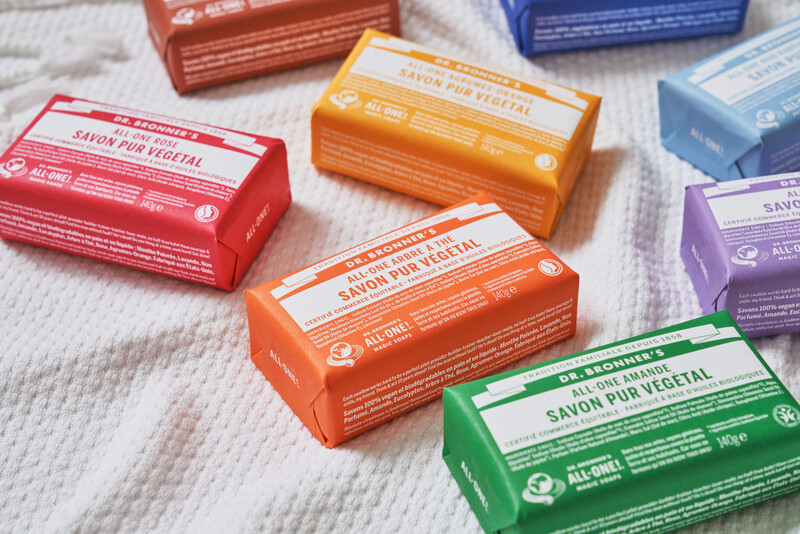
Dr. Bronner's natural Soaps

When the company founder, Emanuel Bronner, who was a third generation soap maker, started making Dr. Bronner’s Magic Soap in 1948, most people were not interested in a simple, ecological soap, but rather wanted detergents made with all kinds of “new and improved” chemicals. It wasn’t until about 20 years later with the rise of the environmental movement in the US that people were looking for natural body care products, so the company is considered a pioneer in the space since Emanuel had been making these products for such a long time. Dr. Bronner’s continued to innovate as a company and was the first body care manufacturer to obtain the USDA Organic Certified food standard in 2003, and then in 2007 became fair trade certified as well. As time goes on, more and more people are learning about the importance of organic body care. They are also becoming warier about using body care products with ingredients they cannot identify or pronounce. They are also investigating what the values are of the companies behind the products they purchase. Dr. Bronner’s is still a family business committed to honoring the vision of Emanuel, by continuing to make socially and environmentally responsible products of the highest quality, and by dedicating all profits not needed for business development to progressive causes and charities. Thus, our brand is more relevant than ever, and is growing more relevant year by year.

Dr Bronner : a family owned business

                                                                                        credit : Dr Bronner’s

Plastic packaging is one of the main challenges the cosmetic industry faces, internationally, as most companies are still using plastic bottles, even when selling certified organic products … You have come up with some innovative solutions concerning plastic recycling, tell us more about it…

Dr Bronner’s :

One of the biggest challenges Dr. Bronner’s faces in this regard is finding a packaging alternative to plastic.

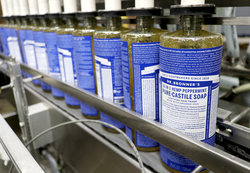
Dr. Bronner’s exclusively uses 100% post-consumer recycled (PCR) polyethylene (PET) plastic bottles for all of our liquid and pump soaps. We’ve been using 100% PCR PET bottles, which are also recyclable, for more than ten years, long before this was common in the personal care industry.

By prioritizing use of PCR PET which can be recycled from used plastic bottles into new plastic bottles and products, we help conserve virgin resources, reduce waste sent to landfills, and capitalize on the energy already invested in making existing plastic products. Recycling one ton of PET containers saves 7.4 cubic yards of landfill space.

“Bottle-to-bottle” recycling, the recycling of plastic bottles into new bottles, is also uncommon. Most often, the plastic picked up for recycling on curbsides is “downcycled,” shipped to countries like China, where it’s used to create synthetic fabrics for carpets and clothes, then shipped back to the US and elsewhere for sale. Bottle-to-bottle recycling helps to close the loop and results in fewer greenhouse gas emissions. Approximately half of all our post-consumer recycled plastic bottles are made of a resin called CarbonLite, which is made from plastic sourced from curbside recycling pick-ups in California.

 Dr Bronner's : bottles recycling


credit : Dr Bronner’s

We have some great partners who are investigating advances in packing innovations so that when a “better than plastic” option is available, we can utilize it. As we continue to minimize our impact, we are researching and trialing other materials, like recycled ocean plastic and bioplastics. Bio-plastics use renewable resources like plants and bacteria to create plastic that would otherwise be produced from petroleum. This technology is still in its early stages and doesn’t yet produce plastics that are resilient enough for our purposes. Also, before adopting bio-plastics, we would need assurance that the plants used in production were sustainably grown and not made from pesticide-intensive GMO-corn. As of now, turning plants into plastic remains more energy intensive than recycling used plastic. Still, we have great hope for the future of this potentially industry-changing innovation.

Your brand seems to be involved in a number of different causes, too, reaching way beyond the cosmetic sector… One of them is encouraging techniques of regenerative agriculture, why is this approach so important, in your opinion?

Dr Bronner’s :

Dr. Bronner’s has always been involved in some kind of advocacy to unite humanity, and for us, it is built into our company ethos to ensure the integrity of our supply chain is paramount considering our footprint. We recognize the importance of our small-scale farming partners using regenerative organic agricultural practices to grow the ingredients for our products. We ensure all the farmers and workers in our supply chains make a living wage and are able take care of their land and communities in a way that regenerates rural economies and promotes biodiverse farming ecosystems. This is done while increasing carbon and fertility in the soil, and avoiding unnecessary pollutants such as pesticides and herbicides from further poisoning fresh water and ocean ecosystems.

This year, we’ve focused on raising awareness of Regenerative Organic Agriculture through our global “Heal Earth!” campaign, which includes setting up a regenerative organic agriculture accreditation standard.


Dr Bronner : regenerative agriculture

credit : Dr Bronner’s

Regenerative Organic Certified (ROC) is a holistic agriculture certification encompassing robust, high-bar standards for ensuring soil health and ecological land management, pasture-based animal welfare, and fairness for farmers and workers. It was created to model an ecological and ethical system for agricultural production that addresses the problems of factory farming, climate change, and economic injustice, locally and globally.

Along with Patagonia, the Rodale Institute, and others, Dr. Bronner’s has dedicated considerable time and resources since 2018 to create and utilize the Regenerative Organic Certification as an integrated, comprehensive program for the following reasons:

  • Regenerative Organic Certification brings the best soil health, animal welfare, and fair labor standards together under a single consumer facing certification, to ensure food, fiber, and raw materials are produced in a regenerative, fair, and humane way.  
  • Regenerative organic practices build soil carbon, make soil drought-proof, and mitigate the impacts of climate change because they help agriculture be more resilient to climate-related volatility in weather. At a global scale, regenerative agriculture could also be a major sink for atmospheric carbon and help to fight climate change, as part of an overall strategy of decarbonizing our economy as a primary goal.
  • Regenerative organic farming at home and abroad boosts farmer incomes and revitalizes rural economies, helping farmers escape the poverty trap and enables them to stay on their land rather than work in urban slums or on corporate plantations. 

Dr. Bronner’s already partners with certified organic and certified fair trade projects to source all of our major raw ingredients, including olive oil from Palestine and Israel, coconut oil from Sri Lanka, peppermint oil from India, and palm oil from Ghana. We are committed to certifying all of our soap products and their main raw ingredients including coconut, olive, palm kernel and mint oils (95% of the brand’s agricultural volume by weight) to the new Regenerative Organic Certified standard.

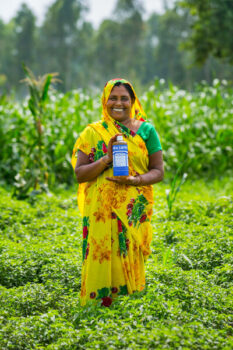
Dr Bronners & Fair Trade

credit : Dr Bronner’s

We are all facing challenging times at the moment (COVID-19, Social injustice, racism, climate change…) what would be the company’s message for everyone… some ideas, tips and tricks? Anything that could help everyone make a change… on their own level.

Dr Bronner’s :

Most importantly we all need to stay informed and stay active, including educating one another on what is possible. When we understand more of what experts and scientists have identified as necessary to address these crises, we can better understand the impact of decision makers, both good and bad, both in the private sector and the public sector. This is crucial in empowering ourselves and organizations to further the necessary dialogue for taking the most effective action as a society.

There is so much good to be done, so much positive change we can make in the world by using our voices and getting involved in progressive causes. This is key to staying optimistic in overcoming these challenges collectively, which are all linked in one way or another, as we are all connected. At times it can seem overwhelming for those who are looking to take action in their own lives. We have small choices we can make every day that can amount to a large impact, like making positive, conscious choices when it comes to food, such as eating less meat, using less plastic and fossil fuel energy, and by supporting companies who have integrity with the products we consume every day.

We deeply respect and appreciate the trust our customers put in us and our products. We encourage all to remember that there is more that unites us than divides us and to use kindness whenever possible. All-One!

Dr Bronner’s website


To read the equivalent article in french :


More brand presentations  :


Interview with Madara Organic Skincare Founder Lotte Tisenkopfa-Iltnere 

Madara Cosmetics seems to be based on a balanced mixture of tradition and innovation, both using traditional northern herbs, essences and seed oils and taking advantage of latest cosmetic trends and innovative trends.

Tell us more about one of the main ingredients, birch water, and its use both in the traditional sense and in madara cosmetics 

Over thousands of years, the harsh climate has evolved plants with extraordinary properties, able to survive temperatures as cold as -40oC, for example, rejuvenating birch water, vitamin-rich arctic berries, antioxidant-packed herbs.

Birch water is a truly phenomenal nature ingredient – it flows just for 1 or two weeks on the outbreak of spring, only in Sub-Arctic and Arctic regions. In Northern countries we use it here as a traditional detox drink to boost health and energy, now it gains popularity as a beauty drink. Birch water contains minerals, rejuvenating amino acids, antioxidants. As a child I remember tapping birch water each spring with my grandfather. MÁDARA pioneered anti-aging concept where regular formula water is 100% replaced with highly active birch water. Simply put, it birch water makes skin cells younger, reverses ageing damage done to skin cells.


In a couple of words what are the main innovations or new key ingredients that Madara cosmetics will be working with, over the next couple of years ?

Our mission at  MÁDARA is to scrutinise the potential of Northern natural raw materials. Researching and understanding why exactly they work and which molecules the skin needs most, we find innovative ingredients to correct wrinkles, maximize hydration and give skin a boost.

We follow 3 key criteria – 100% natural, efficient and safe. For instance, one of the latest innovation projects indicates that plant stem cells can provide 10-fold doses of antioxidants helping to protect the skin from pollution and ageing.


In your vision, what are the main challenges and also opportunities that organic certified cosmetics are facing right now ?

One of the biggest challenges across all industries is to find new ways of more sustainable production and consumption.  There will soon be more plastic bags in the ocean than fishes. Redefining the production model has been our value from day 1. We make our products from organic ingredients, pack them in 100% recyclable, post-consumer recycled and plant-based packaging, use green energy to produce it all.

MADARA is one of the first public listed companies to publish a new type of sustainability report, called ESG (stands for Environmental sustainability, Social responsibility, and corporate Governance).  Link to the ESG 

If we think more about organic beauty industry, a very significant challenge is to fight back greenwashing that comes a lot from semi-green producers and brands.


Your company has considerably grown over the last decade, your brand now also shines in a international light, which are the aspects you are personally most proud of ?

I am extremely proud of my team – from research and laboratory to production, form marketing to customer service – they are brilliant, passionate and professional. I am also very proud of MADARA becoming a public listed company, as well as launching our latest organic-certified factory, which is open for public every day – people can come and experience how natural ingredients translate into innovative organic beauty products.   

There is also a french version of this article