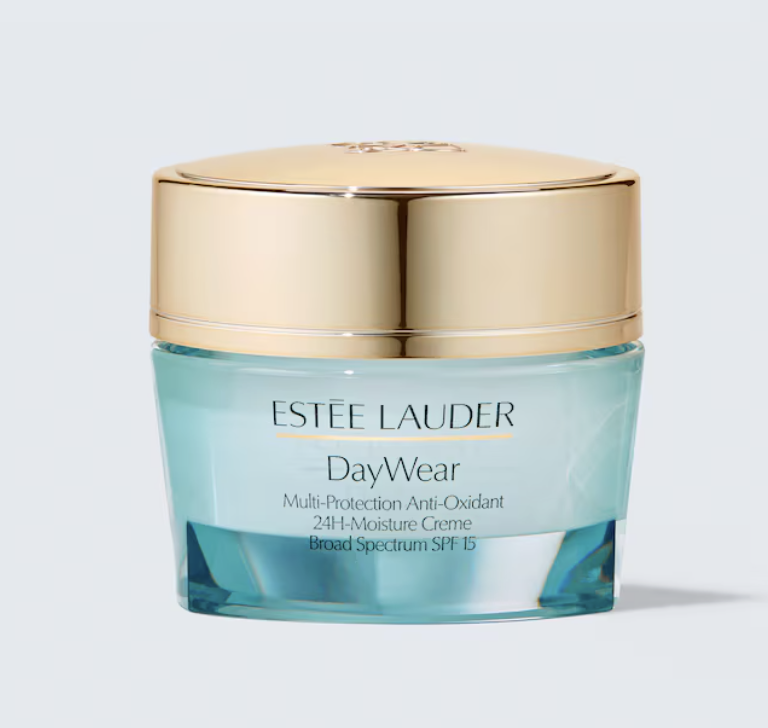
Super “anti-oxidant complex” and sustainable brand commitments —
Or Just More Marketing?
Estee Lauder is one of the world’s most powerful cosmetic groups, second only to L’Oréal. Like most multinational beauty companies, it proudly promotes its “Caring for the Environment » commitment with polished sustainability statements.
On their website, you can read
“Caring for the Environment
We’re committed to a more beautiful future. Our mission will always be to bring the best to everyone we touch and to help support the environment in which we live.Through innovation and responsible business practices that help address climate change, we’re working to create a more beautiful world for future generations. A Force for Nature What we’re doing today and tomorrow for a more beautiful future. “
Let’s have ac closer look at the product, then…
But what happens when we look past the promises and focus on a single product — not through marketing claims, but through its actual ingredients?
This month’s Cosmetic Truth Analysis spotlights:
Estee Lauder DayWear Moisturizer Multi-Protection Anti-Oxidant 24H-Moisture Creme SPF 15 – $52.00
Brand Claims vs Reality
According to Estée Lauder, this moisturizer:
- Provides 24-hour hydration
- Is “more powerful than Vitamin C or Vitamin E alone”
- Features a “Super Anti-Oxidant Complex”
- Offers SPF 15 broad-spectrum UV protection
Highlighted ingredients include:
- Vitamin C + Vitamin E antioxidant blend
- Hyaluronic Acid for m
However — like most cosmetics — only the “hero ingredients” are showcased.
The real formulation power lies in the excipient, or base. And that is almost never advertised.
According to K.P. Witten (Former Head of Development at Beiersdorf): “80% of a cosmetic’s performance comes from the excipient. Actives account for only 20%.”
So let’s dissect what really makes up this popular moisturizer.

Full INCI Breakdown:
What’s Really Inside Estee Lauder DayWear?
Water Aqua Eau, Ethylhexyl Salicylate, Dimethicone, Butyloctyl Salicylate, Butylene Glycol, Butyl Methoxydibenzoylmethane, Polyester-8, Cetyl Ricinoleate, Steareth-21, Steareth-2, Di-c12-15 Alkyl Fumarate, Caprylic/capric/myristic/stearic Triglyceride, Polysilicone-11, Psidium Guajava (guava) Fruit Extract, Gentiana Lutea (gentian) Root Extract, Stearyl Alcohol, Polygonum Cuspidatum Root Extract, Hordeum Vulgare (barley) Extract Extrait D’orge, Laminaria Ochroleuca Extract, Rosmarinus Officinalis (rosemary) Leaf Extract, Triticum Vulgare (wheat) Germ Extract, Artemia Extract, Caffeine, Pentylene Glycol, Hydrolyzed Rice Extract, Vitis Vinifera (grape) Seed Extract, Hydrolyzed Rice Bran Extract, Lauryl Peg-9 Polydimethylsiloxyethyl Dimethicone, Thermus Thermophillus Ferment, Behenyl Alcohol, Acrylic Acid/vp Crosspolymer, Triacontanyl Pvp, Glycerin, C12-15 Alkyl Benzoate, Linoleic Acid, Cholesterol, Squalane, Sodium Pca, 1,2-hexanediol, Urea, Caprylic/capric Triglyceride, Dipropylene Glycol Dibenzoate, Tocopheryl Acetate, Acrylamide/sodium Acryloyldimethyltaurate Copolymer, Tetrahexyldecyl Ascorbate, Sodium Hyaluronate, Ergothioneine, Isohexadecane, Ppg-15 Stearyl Ether Benzoate, Glycyrrhetinic Acid, Trehalose, Polyquaternium-51, Polysorbate 80, Potassium Sorbate, Lecithin, Hydrogenated Lecithin, Glucose, Palmitoyl Hydroxypropyltrimonium Amylopectin/glycerin Crosspolymer, Caprylyl Glycol, Cyclodextrin, Sodium Hydroxide, Nordihydroguaiaretic Acid, Sodium Chloride, Triacetin, Ascorbyl Tocopheryl Maleate, Fragrance (parfum), Citric Acid, Ethylbisiminomethylguaiacol Manganese Chloride, Pentaerythrityl Tetra-di-t-butyl Hydroxyhydrocinnamate, Disodium Edta, Bht, Chlorphenesin, Sodium Dehydroacetate, Phenoxyethanol, Blue 1 (ci 42090), Yellow 5 (ci 19140), Chromium Hydroxide Green (ci 77289)
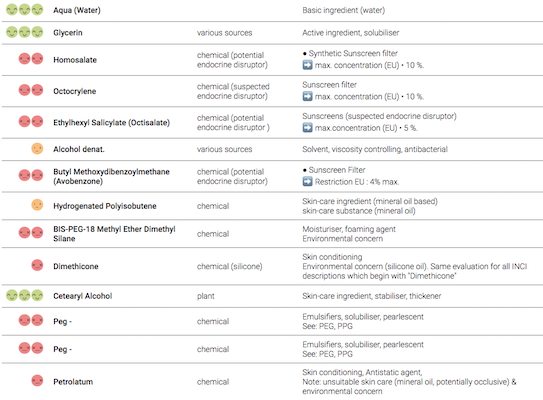
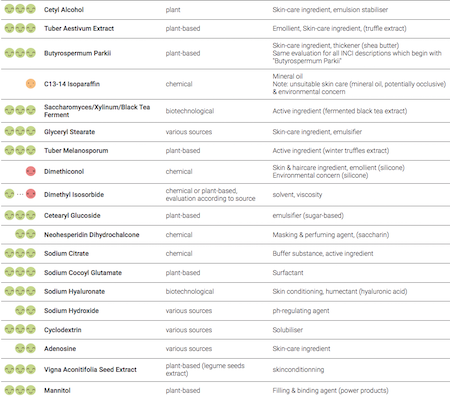
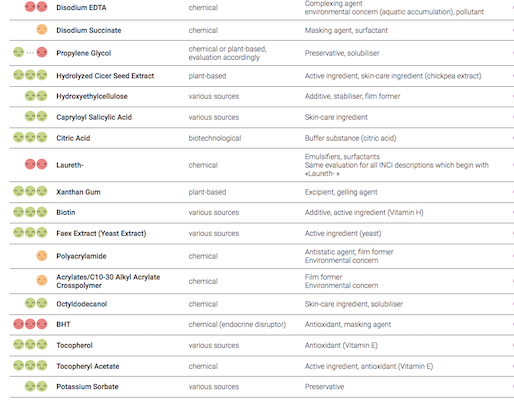
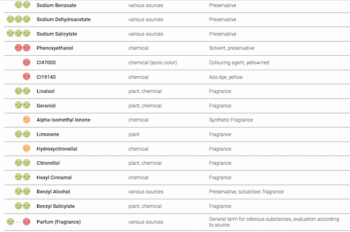
As in all cosmetic formulations, the first 5–10 ingredients make up the bulk of the product. And that is where the truth lies. The base formulation (excipient) is here mainly conventional, synthetic-heavy, environmentally questionable. Hydration for example is mainly achieved mostly via silicones, not skin-beneficial oils. But it’s always important to look at the full picture and this formulation also includes some very problematic other ingredients.
Controversial Ingredients in Estee Lauder’s DayWear Moisturizer
A closer look at the ingredients reveals multiple controversial ingredients:
- Ethylhexyl Salicylate (Octisalate) – Flagged for possible hormonal activity.
- Butyl Methoxydibenzoylmethane (Avobenzone) – Chemical sunscreen, suspected endocrine disruptor
- BHT, another suspected endocrine disruptor
- Numerous PEGs and Quats– problematic manufacturing (ethoxylation) & Environmentally persistent
- Phenoxyethanol – Preservative restricted in the EU for irritation risks and other issues.
- Dimethicone Silicones that are pollutants.
- Chlorphenesin – Synthetic preservative, potential allergen, bioaccumulative.
- Yellow 5 (CI19140), azo dyes, can cause allergic reactions
Final Verdict: A Glossy Image, But an Outdated Formula
Conclusion:
Estee Lauder DayWear Moisturizer may sound high-tech and protective, but its ingredient list reveals a basic synthetic formula with controversial UV filters, silicones, and pollutants — packaged in an eco-friendly brand messaging.
FAQ – Estee Lauder DayWear Ingredient Questions
- Is Estee Lauder DayWear safe for sensitive skin?
Not ideal. It contains multiple potential irritants, including fragrance, chemical UV filters, and preservatives such as phenoxyethanol. - Is Estee Lauder clean ?
No. Clean Beauty, as such, has no clear definition, but this ingredient list would not not be acceptable for organic, certified cosmetics (USDA organic, Cosmos, Soil Association etc)
3. Does Estee Lauder DayWear contain parabens?
No parabens listed, but other synthetic highly problematic preservatives (like BHT and Chlorphenesin) are present.
3. Is Estee Lauder DayWear silicone-free?
No. It contains Dimethicone, Polysilicone-11, and other silicone derivatives.
4. Is the SPF protection mineral or chemical?
Chemical-only UV filters, including Avobenzone and Ethylhexyl Salicylate, suspected endocrine disruptors.
5. Is this product environmentally friendly?
No. Its formula contains non-biodegradable silicones, and numerous other pollutants.
How to Switch to Safer Skincare — The Smart Way
To avoid harmful chemicals in your cosmetics, you need to:
- Learn how to read cosmetic labels and detect risky ingredients such as silicones, PEGs, parabens, or chemical UV filters.
- Know which cosmetic certifications truly guarantee clean beauty standards.
- Select natural or organic products with transparent ingredient policies.
✨ We’ve created a complete Online Training to help you identify toxic-free beauty products with confidence. In this workshop, you’ll learn to:
- Analyse cosmetic ingredients and spot hidden endocrine disruptors.
- Go beyond simple “banned ingredients lists” and understand formulation logic.
- Recognise trustworthy eco-certifications and avoid misleading claims.