

Is Amika’s “Clean” Hair Mask as Pure as You Think?
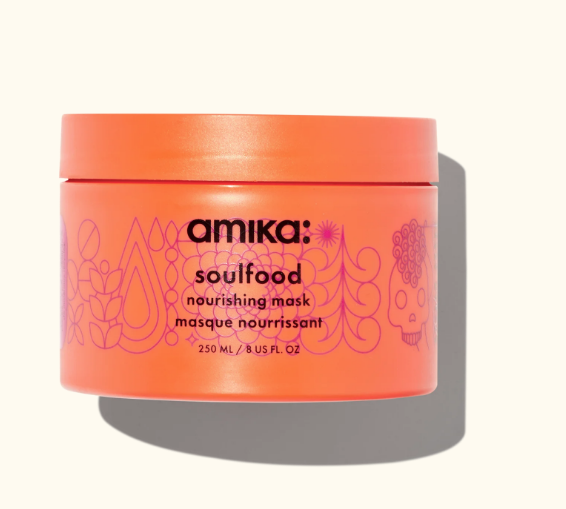
We all love the idea of pampering our hair with natural, nourishing products. Beauty brands have caught on—and now nearly every hair treatment claims to be “clean,” “toxin-free,” or “without nasties.” But are these promises real, or just marketing camouflage? This month, we place another product under the microscope with a Amika Soulfood Hair Mask Review: AMIKA SOULFOOD nourishing hair mask -32$
Amika positions itself as a fun, ethical, Brooklyn-born brand with “highly effective, clean formulas” and “no nasties.” But what do their ingredients say? Let’s find out with Amika Soulfood Hair Mask Review.
Amika’s Brand Philosophy — Inspiring or Misleading?
Amika describes itself as: Highly effective, clean formulas without sulfates, parabens, phthalates, aluminum starch, and over 1,300 banned EU ingredients. Always cruelty-free and vegan.”
A bold promise. But what exactly does clean mean here? To answer that, we must look beyond the marketing labels and go straight to the INCI list.
Amika Product Claims:
What Amika Says About the Soulfood Mask
According to the brand, the Soulfood Hair Mask is : “Ultra-luxurious, rich and creamy, but never heavy” “Packed with vitamins and nutrients” “Leaves hair soft, shiny, and deeply hydrated” “Perfect for all hair types”
Sounds impressive. But let’s compare these claims with the actual formulation.
Full Ingredient List (INCI)
Ingredients/ INCI*:
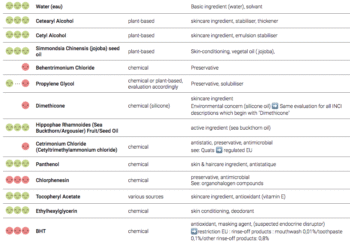
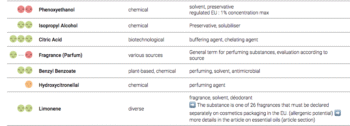
Water/Eau/Aqua, Cetearyl Alcohol, Cetyl Alcohol, Simmondsia Chinensis (Jojoba) Seed Oil, Behentrimonium Chloride*, Propylene Glycol, Dimethicone, Hippophae Rhamnoides (Sea Buckthorn/Argousier) Fruit/Seed Oil, Cetrimonium Chloride*, Panthenol, Chlorphenesin, Tocopheryl Acetate, Ethylhexylglycerin, BHT, Phenoxyethanol, Isopropyl Alcohol, Citric Acid, Fragrance/Parfum, Benzyl Benzoate, Hydroxycitronellal, Limonene *antistatic agent/agent antistatique
Amika Soulfood Hair Mask Review:
As always, it is the first 5-10 ingredients that make up the majority of the product’s overall “profile”. And Amika’s hairmask includes already a large number of controversial and questionnable ingredients, silicone-based ingredients (polluting), questionnable synthetic preservatives (Chlorphenesin, BHT) etc.
Amika Soulfood Hairmask: : problematic ingredients
A list of controversial ingredients have slipped into the formula of AMIKA’s Soulfood Hairmask:
- BHT, preservative (suspected endocrine disruptor)
- The synthetic preservative Chlorphenesin, an organohalogen that can have allergenic effects and problematic because it can accumulate in the body.
- DIMETHICONE, – silicones : environmentally problematic substances (not very biodegradable), pollutants
- Cetrimonium Chloride, a synthetic preservative or hair conditioner (antistatic), which is part of synthetic quats category, substances that are not very biodegradable/polluting and slightly irritating.
- Phenoxyethanol, a controversial synthetic preservative with proven toxic potential (notably harmful to the liver)
- The « Fragrance »/ Perfume listed in the INCI list can also sometimes be a problem: since it is a non-certified product (in natural and organic cosmetics), there is a good chance that it is a synthetic fragrance, which very often also contains phthalates, also classified as endocrine disruptors. To avoid the presence of phthalates, the only certainty would be to opt for a certified product, as synthetic perfumes are simply not authorised by the various specifications in natural and organic cosmetics.

Conclusion : Amika Soulfood Hair Mask Review
A Fun Brand, But Not a Truly Clean Formula
Despite its colorful branding and bold claims, the Amika Soulfood Hair Mask is far from a genuinely clean or environmentally responsible formulation.
✔️ Pros: Pleasant texture and sensorial feel & Contains jojoba and sea buckthorn oils
❌ Cons: Relies on silicones, quats, and synthetic preservatives. Includes suspected endocrine disruptors
Not compatible with true “clean” or certified organic beauty standards
Top Tips for Choosing Hair Products – Without Controversial Ingredients
Here are a couple of tips for choosing the right products
1. Educate Yourself on Controversial Ingredients:
Start your haircare journey by getting informed about controversial ingredients commonly found in beauty products. You can use the website’s free INCI research tool and dive deeper into the subject with the different articles on the website.
1. Educate Yourself on Endocrine Disruptors:
Endocrine disruptors are harmful chemicals present in various beauty products. These chemicals can interfere with your hormonal balance and potentially lead to serious health issues. It is never enough to choose products labeled as just “paraben-free” or “clean beauty” as the products can still contain endocrine disruptors or harmful ingredients. Certified organic cosmetics however, provide more guarantees, endocrine disruptors are simply not allowed in the formulation process by the different labels. More detailed information also here. If the product is not certified, make sure to check the ingredient list.
4. Avoid Silicones and mineral-oil derived ingredients (Petrolatum, etc):
Likewise, Silicones are commonly used in beauty products to create a smooth texture and long-lasting effects. However, they represent a huge toll on the environment, as they are not biodegradable. When selecting hair products, choose those with silicone alternatives such as natural waxes or nourishing oils (jojoba, sesame, argan, olive, coconut etc) sheabutter, or cocoa butter.These ingredients provide hydration and a comfortable wear without the negative side effects. Again, silicones and mineral oil derived ingredients are not allowed in certified organic cosmetics. If the product is not certified, make sure to check the ingredient list.
2. Stay Away from PFAS (Perfluoroalkyl Substances):
PFAS are a group of chemicals used in many industries, including cosmetics. They have been linked to adverse health effects and are extremely persistent in the environment. This is a tremendous environmental concern, which of course concerns many other industries. Check the ingredient list for PFAS-related compounds like PTFE or perfluorooctanoic acid (PFOA) and educate yourself on the subject as well.
5. Be Mindful of certain synthetic Preservatives:
Preservatives are essential to prevent the growth of harmful bacteria and extend the shelf life of cosmetics. However, some synthetic preservatives, such as formaldehyde releasers or phenoxyethanol have been linked to skin irritations and allergies and other more serious health concerns. Others fall into the category of endocrine disruptors (some parabens (but not all parabens), triclosan, etc).
2. Embrace Organic (certified!) Cosmetics:
Organic cosmetics have gained immense popularity in recent years for their commitment to using natural and pure ingredients. Choose « certified organic »- hair products – and brands which have certification seals from respected organic regulatory bodies. These products are formulated without controversial ingredients and provide a gentle yet efficient alternative for keeping your hair healthy and lustrous.
FAQ – Amika Soulfood Hair Mask Review & Clean Beauty Claims
? Does Amika Soulfood have silicones
Yes. The formula contains Dimethicone, which is a common silicone. While it makes hair feel smooth temporarily, it is not biodegradable and can build up on both hair and the environment.
? Is Amika Soulfood Hair Mask safe for sensitive scalps
Not ideal. It contains quats (Cetrimonium Chloride), synthetic preservatives (Phenoxyethanol, Chlorphenesin), and fragrance, all of which may cause irritation or allergic reactions for sensitive individuals.
? Does “paraben-free” mean the product is clean
No. A product can be paraben-free and still contain other controversial preservatives or suspected endocrine disruptors such as BHT or Phenoxyethanol. “Paraben-free” is not enough to guarantee safety.
? Is this product considered truly “clean beauty”
Clean Beauty has no official, clear definition, every brans can define the concept according to their own standards. But this product would not meet certified organic standards (COSMOS, Ecocert, Soil Association, etc.). These certifications would not allow many of the ingredients found in this formula.
Article Update : 12/2025